| |  | | |  | Peace, Hope, Justice, and Democracy:
Voting Our Values For nearly two years, many of us have returned week after week to a small flame surrounded by barbed wire: the Candle of Peace, Hope, and Justice. 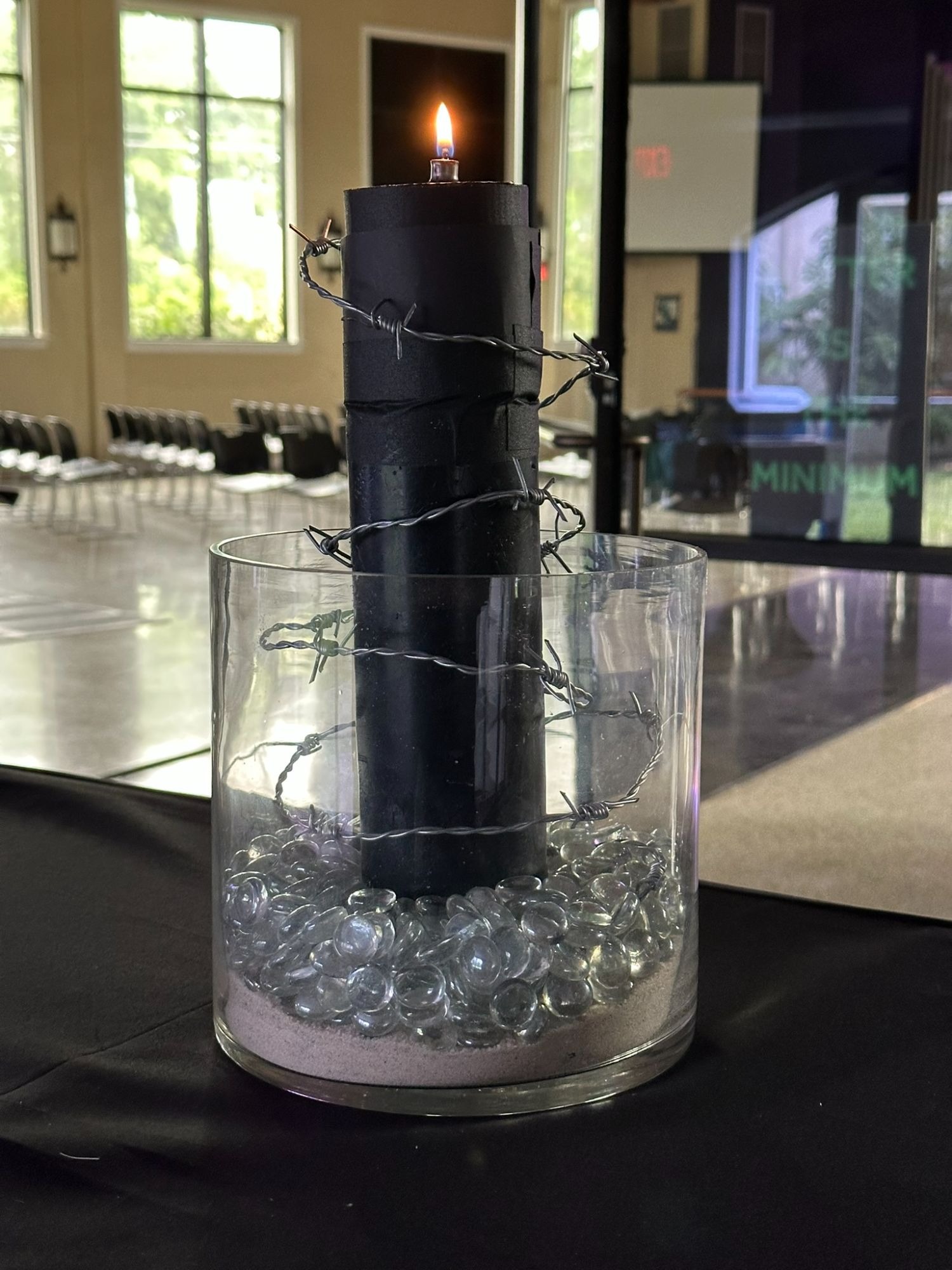 The practice reaches back to the Central Methodist Mission in Johannesburg during apartheid, where Christians lit a candle encircled in barbed wire and named people suffering under systems of racial oppression. As the candle burned, they proclaimed the promise of John’s Gospel: the light shines in the darkness, and the darkness has never overcome it.
Beginning in early 2025, congregations across the United States revived that practice. This election season, we are carrying it with us through eight weeks of reflection on four values that shape how we live together: Peace, Hope, Justice, and Democracy. Last week, we reflected on what it means to keep seeking justice when the work feels endless. This week, we consider what justice asks of us when our neighbors have no place to call home. Homelessness is often discussed in terms of statistics, public spaces, and problems to be managed. But behind every statistic is a person with a name, a history, relationships, and hopes for the future. Justice asks us to see our neighbors not as problems to be moved out of sight, but as people whose dignity must never be negotiable. | | For People Experiencing Homelessness
Prayer originally from March 30, 2025, written by Rev. Andy Oliver, adapted by MFSA
Today we light the Candle of Peace, Hope, and Justice for people experiencing homelessness—our neighbors who are too often treated as disposable by those in power. For those swept from encampments under threat of government force, as if their existence were an offense. For people unhoused in cities where mayors and governors have spoken the language of justice while sending in bulldozers and police to destroy makeshift shelters. For those who have had their few belongings confiscated and tossed away in sweeps carried out in the name of “cleaning up” public spaces rather than addressing the root causes of poverty. For every person who has been displaced, dehumanized, and treated as a problem to be solved rather than a person to be seen, welcomed, and loved.
For people who are transgender or undocumented who are turned away from shelters. For families on the brink of stability, only to have housing assistance reduced, eviction protections weakened, and wages suppressed by policies favoring the wealthy over the working poor. For those criminalized simply for existing—for sleeping on benches, for resting in their cars, for asking for help in places where asking is no longer allowed. For every person who has been evicted—not because of poverty, but into poverty. For we know that eviction is not just a consequence of financial hardship, but often the very thing that causes it, stripping people of stability, community, and a chance to recover. For service providers forced to watch suffering grow as inadequate funding and barbed-wire policies leave them with empty hands and breaking hearts.
And we confess. We confess our own apathy, our own willingness to look away. We confess the times we have accepted comforting narratives that blame those who are unhoused rather than holding accountable those who create and maintain the conditions that lead to homelessness. We confess that too often, we have been content with charity when justice is what you require. Forgive us, God, and move us from complacency to action. | | The light shines in the darkness, and the darkness has never overcome it. The prayer reminds us that meeting someone's immediate needs and addressing the conditions that created those needs are not the same thing. A meal matters. A blanket matters. A safe place to sleep matters. And, importantly, justice asks us to look beyond the immediate need and consider why our neighbors are struggling to find safety and stability in the first place. Where people have been reduced to statistics, may we remember their humanity.
Where compassion ends with a temporary solution, may we ask what lasting change requires.
Where it is easier to look away, may we choose to see one another. As we move through this election season, may we consider how those we elect shape decisions in our communities and affect those with the least security and the fewest resources. May our concern for our neighbors extend beyond any single act of charity, any single election, or any single moment of compassion. May we vote our values—and live them beyond the ballot box. And may justice be more than the kindness we offer. May it also shape the communities we build together. Empower us, Jesus, to boldly use the freedom and power given to us to resist evil, injustice, and oppression in whatever forms they present themselves. | | | | | | | | | | | |