| |  | | | Dear Justice-Seeker, This issue of MFSAVoices is jam-packed with resources and information. So much so that it won't all fit in your email message so be sure to click view entire message at the bottom of this email to view the entire issue. Our newsletters are designed to be used all month long. So take a quick glance and take note of important dates to add to your calendar but also come back in the following weeks to work your way through the action items. Gmail users—move us to your primary inbox - On your phone? Click the 3 dots at the top right corner, click "Move to" then "Primary"
- On your desktop? Back out of this email then drag and drop this email into the "Primary" tab near the top left of your screen
We continue to see the urgency of our work to make broad systemic change. Change that honors the dignity and worth of all people, puts people over money, and honors the earth and all her inhabitants. Since 1907, MFSA has been shining a light on injustice and organizing to change it. You make our collective work possible by your witness for justice every day in your church, community, and Annual Conference. MFSA does not receive any financial support from the United Methodist Church's giving channels. 100% of our budget is funded through your membership dues and your generosity in giving. | | | | | | 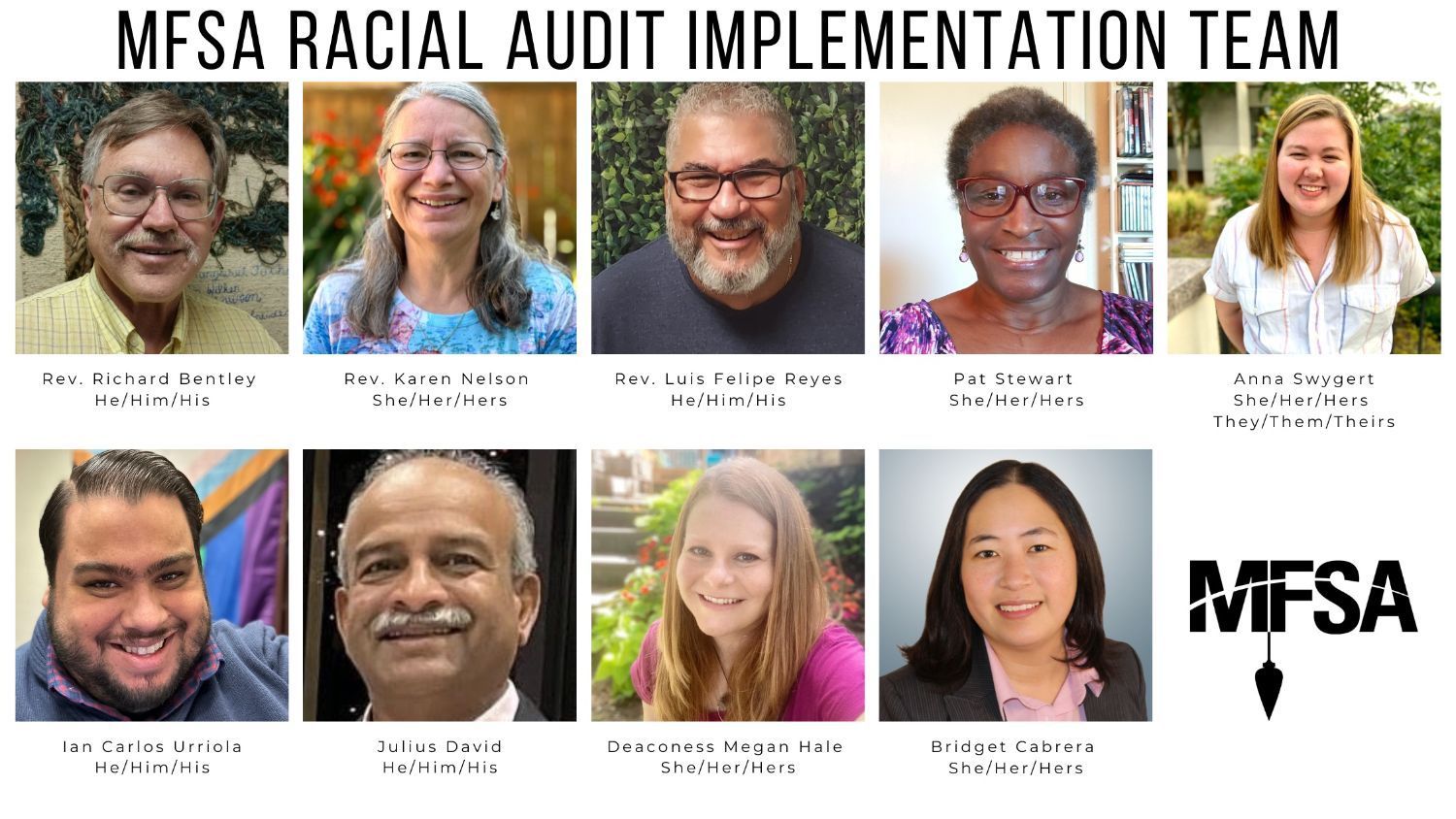 | MFSA Racial Audit Implementation Team Expansion | In June 2023, the Methodist Federation for Social Action Board of Directors took a clear step forward by creating the Racial Audit Implementation Team. This team was formed in response to the findings of MFSA’s racial audit, with a shared goal: to help reshape the organization so that equity and justice are not just values we name, but practices we live out—within MFSA, across the church, and in the world around us. Since then, this team has been doing the steady, often behind-the-scenes work of implementing the Racial Audit's recommendations. Originally composed of seven members, the team has been guiding how these recommendations take root in real structures, relationships, and decisions. Now, that work is growing. We’re expanding the team with two new members: Julius David and Deaconess Megan Hale. Julius David brings more than 25 years of involvement at East Lake United Methodist Church in Florida, along with leadership in disaster recovery, interfaith justice work through FAST (Faith & Action for Strength Together, a local inter-faith congregation-based justice group), and district-level anti-racism efforts. His experience spans both church leadership and community organizing, grounded in a consistent commitment to compassion and justice—especially for those whose voices are too often overlooked. Megan Hale brings a deep connection to both the history and future of justice work in the church. A consecrated deaconess in the United Methodist Church, she has served in leadership roles in Reconciling Ministries and social justice advocacy across multiple regions. With academic training in theology and social justice, and ongoing involvement in MFSA’s New York Chapter, Megan’s work is rooted in both lived experience and a long tradition of faith-based organizing for change. The work of the racial audit team and the implementation team is important, and that’s why we continue to invest in it. The racial audit is not a finished report sitting on a shelf. It’s an ongoing invitation—to listen more closely, to act more faithfully, and to keep becoming a community where justice is practiced, not just proclaimed. | | | | | | | | | | Racial Justice in the Context of the Philippines By Camille Bianca Sumera Manangan, MFSA Organizing Associate My country, the Philippines, is an archipelago in Southeast Asia, but more than that, it is a country shaped by a long history of colonization. You can see this everywhere, especially in our infrastructure, like old churches and buildings, and even in the words we use. For example, “kumusta ka?” which means “how are you?” in English, comes from the Spanish phrase “como está?”, showing how much Spanish colonization has influenced our language. These are not just small details, they are proof of how deeply colonization has shaped our identity as Filipinos. At the same time, American influence is also very present in our lives. It shows in the music we listen to, the movies we watch, and even in the fast food we enjoy. McDonald’s is everywhere, but for me personally, Jollibee still feels more like home. These things may seem normal to us, but they are actually reminders of how other countries have shaped and influenced who we are today. In many ways, this reflects a deeper pattern where, as the MFSA racial audit explains, there are “continuous patterns of privilege and paternalism” that are not always recognized, even when they continue to shape people’s lives. The Philippines’ history of colonization is one example of this. Even though it was shorter, Japanese colonization also left a deep mark on our history. It was a time of fear, violence, and survival, where many Filipinos suffered, lost their homes, and lived in constant uncertainty. Stories from that period, like the hardships of our grandparents and the bravery of guerrilla fighters, are still remembered today. Because of this, the Japanese occupation did not just shape our culture, but also strengthened our resilience and our ability to endure hardship. This shows that while colonization brought pain, it also revealed the strength of the Filipino spirit. These different colonial experiences and their influences have blended into our daily lives so naturally that we rarely stop and question them. Filipino identity today is not purely our own, but a complex mix of foreign influences and local resilience. This means who we are today as Filipinos are both shaped by colonization and by our ability to adapt and survive. Because these experiences and influences have been passed down from generation to generation, they now feel somewhat normal to us. They are taught in schools, shown in the media, and practiced in everyday life. Sometimes, we even take pride in them as if they are fully our own, we indigenized them. It is true that there is something beautiful about cultures coming together. However, we also need to be honest about the truth behind it. Colonization was not simply an exchange of culture. It involved violence, control, and the loss of many parts of our original identity. Many of the systems we still follow today were not designed for Filipinos, but for the benefit of colonizers and those in power. One example of this is how our own writing system, Baybayin, was almost lost because colonization reshaped our education system to be Western-centered. Because of this, what we consider “normal” today may actually come from a history that not only changed us but harmed us especially our ancestors. This is also why we often fail to notice these problems. We are distracted by modern life, by new trends, technology, and the idea of “progress.” We are told that foreign influence and global partnerships are good for us, and sometimes they are. But in many cases, they do not truly benefit ordinary people. Instead, they often serve those who already have power, such as government officials and large corporations. Meanwhile, the needs of everyday people are left behind. This creates a gap between what is presented as progress and what people actually experience in their daily lives. In the same way, systems can easily avoid responsibility when, as the MFSA racial audit points out, they “let themselves off the hook for their own failures,” instead of confronting the deeper issues that continue to harm people. We can see this clearly in real-life situations, such as the recent Department of Public Works and Highways (DPWH) contractor scandal in the Philippines, where corruption and poor decision-making led to poorly constructed flood control projects that put people’s lives at risk and resulted in the loss of many lives.This shows that the problems we face today are not just isolated incidents. They are connected to deeper systems that have been shaped over time, including during the period of colonization. These systems can still prioritize money and power over people, proving that the effects of colonization are not only part of our history but are still present in the way our society functions today. Because of all this, being Filipino today means living in between two realities. On one hand, we carry the influences of our past, including those brought by colonization. On the other hand, we are still trying to understand who we truly are and how we can reclaim our identity. Although Spanish, American, and Japanese colonization in the Philippines are often said to have brought “advantages,” these came at a deep cost. They somehow slowly weakened what is truly Filipino in us. Colonization did not just influence us, it deeply wounded us. It reshaped how we see ourselves, until we sadly yet realistically, began to value what is foreign more than what is our own. In many ways, colonization feels like a violation of our culture, our being, and our soul. We became Westernized, sometimes at the expense of our indigenous wisdom, our ways of living, and our understanding of community. Our natural gifts, worldview, and values were pushed aside, silenced, or made to seem less important. I asked one of my closest pastors in the Philippines, Rev. Mervin Anthony Montano, what he thinks about colonization, and he explained that it can be seen as “a kind of rape of our culture and soul,” where what was once whole and rooted became broken and reshaped by outside forces. Because of this, even the Western influences we see today, such as fast food, religion, education, music, and social media, are not just simple preferences. They reflect a deeper reality. As he also says, “we are building their world rather than our world, their culture rather than our culture.” For me, this is a sad reality that we may never fully escape as long as we continue to follow systems and mindsets that were shaped by colonization instead of fully valuing our own. In the end, reclaiming our identity is not easy, but it is necessary. If Filipino identity has been shaped by colonization and foreign influence, then we have the responsibility to question what we have accepted as normal. This requires awareness, honesty, and courage. We must learn our history, reflect on what we have been taught, and choose what truly represents us as a people. At the same time, we must stand up for justice and challenge systems that continue to harm Filipinos. Reclaiming our identity is not about rejecting everything foreign, but about remembering who we are at our core. Because if we do not question what has shaped us, we will continue living in a world that was built for us, but never truly by us. And maybe real freedom begins when we finally choose to build and embrace a future that is truly our own. | | 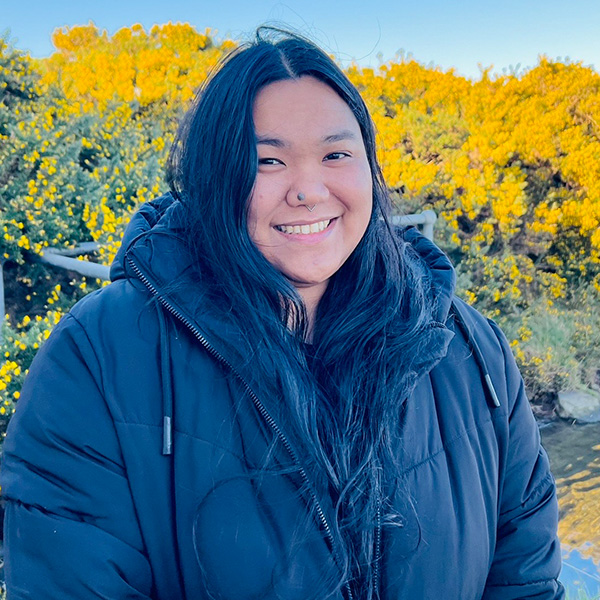 Camille Bianca Sumera Manangan (she/her/hers) is a dedicated leader in faith, justice, and advocacy. She served as an intern with the General Board of Church and Society in 2018 and is currently a board member of the General Commission on Archives and History’s Center for LGBTQ+ United Methodist Heritage. Camille Bianca Sumera Manangan (she/her/hers) is a dedicated leader in faith, justice, and advocacy. She served as an intern with the General Board of Church and Society in 2018 and is currently a board member of the General Commission on Archives and History’s Center for LGBTQ+ United Methodist Heritage.
She earned her Bachelor of Arts in Legal Management from the University of the East – Manila. She served as a Global Mission Fellow in the United Kingdom from 2022-2024. Camille is now continuing her theological studies at Drew Theological School in New Jersey. | | | | | |  | MFSA Action Opportunity:
Stop ICE Overreach & Restore Human Dignity The United Methodist Social Principles affirm the inherent dignity of every person, the right to seek asylum, and the fundamental humanity of migrants and refugees. They call us to support immigration policies that are humane, just, and rooted in the recognition that every person bears the image of God. Current enforcement practices violate these principles at every turn.
Immigration raids are tearing families apart without warning or due process. People are being held in detention centers that violate basic standards of health and sanitation. Asylum seekers are being deported to countries embroiled in active conflicts. Military assets and rhetoric are being deployed against civilian populations who have committed no crimes. The asylum system this country has upheld for decades is being systematically dismantled. We see these things happening in our communities, in our congregations, and to our neighbors. It often feels like we cannot win. But the fight isn't over yet. Senators and Representatives have done little to stand up to the Trump administration — but they still hold legislative, financial, and governing power they can wield, if they are brave enough to do so. The time is now to make your voice heard. Contact your senators and representative today. Urge them to rein in a rogue ICE agency that continues to harm the most vulnerable among us, and to support comprehensive immigration reform. | | | | | | | | 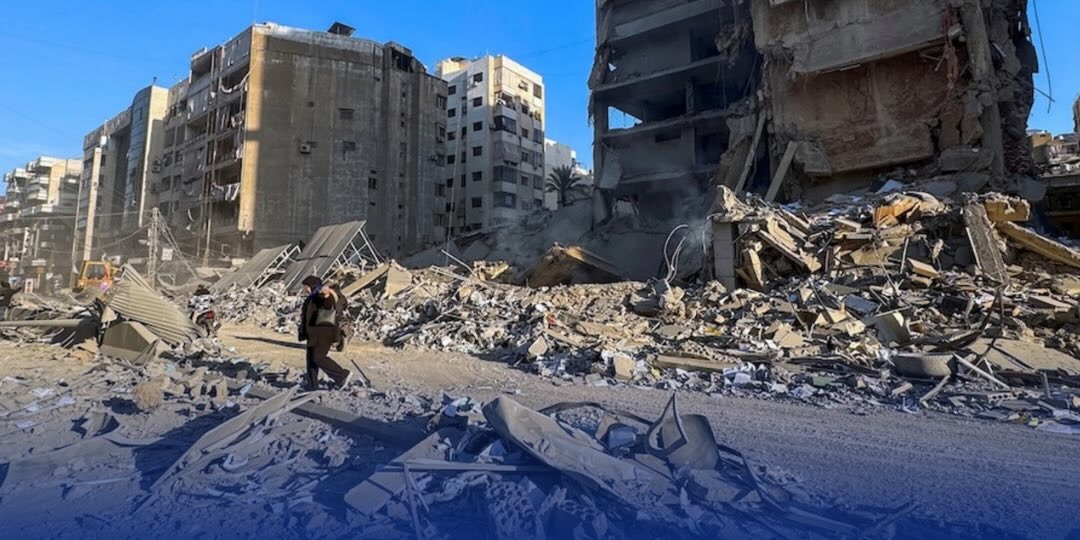 | MFSA Joins Faith and Social Justice Groups to
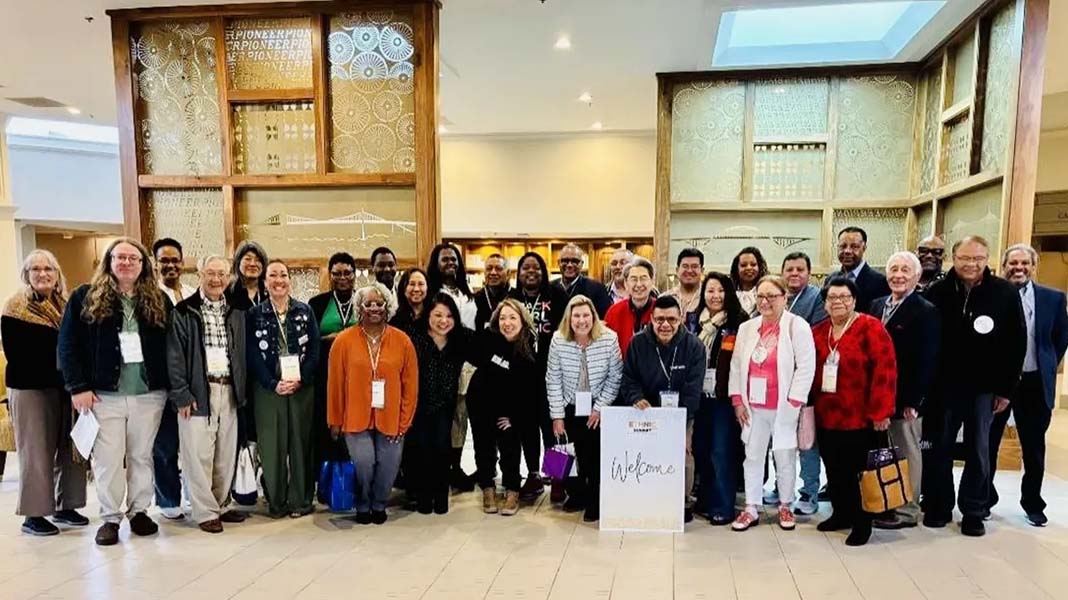
Stand with the People of Lebanon The Methodist Federation for Social Action has joined a growing coalition of faith and advocacy organizations supporting two congressional resolutions introduced by Rashida Tlaib (MI-12). These resolutions call for an end to U.S. support for the ongoing military assault in Lebanon and urge accountability for human rights violations, while also invoking the War Powers Resolution to limit unauthorized U.S. involvement in the conflict. As people of faith, we believe our call is to stand with those most impacted by violence—families displaced, communities destroyed, and lives lost. Reports indicate widespread destruction and the displacement of over a million people, underscoring the urgent need for a ceasefire and a just path forward. By signing on, MFSA affirms that U.S. policy should reflect a commitment to human dignity, international law, and the pursuit of peace. | | | | | |  | Read this statement from the InterEthnic Strategy Development Group (IESDG) and its allies about the concerns of this upcoming General Conference's location of Minneapolis and sign on in support. | | | | | | | | 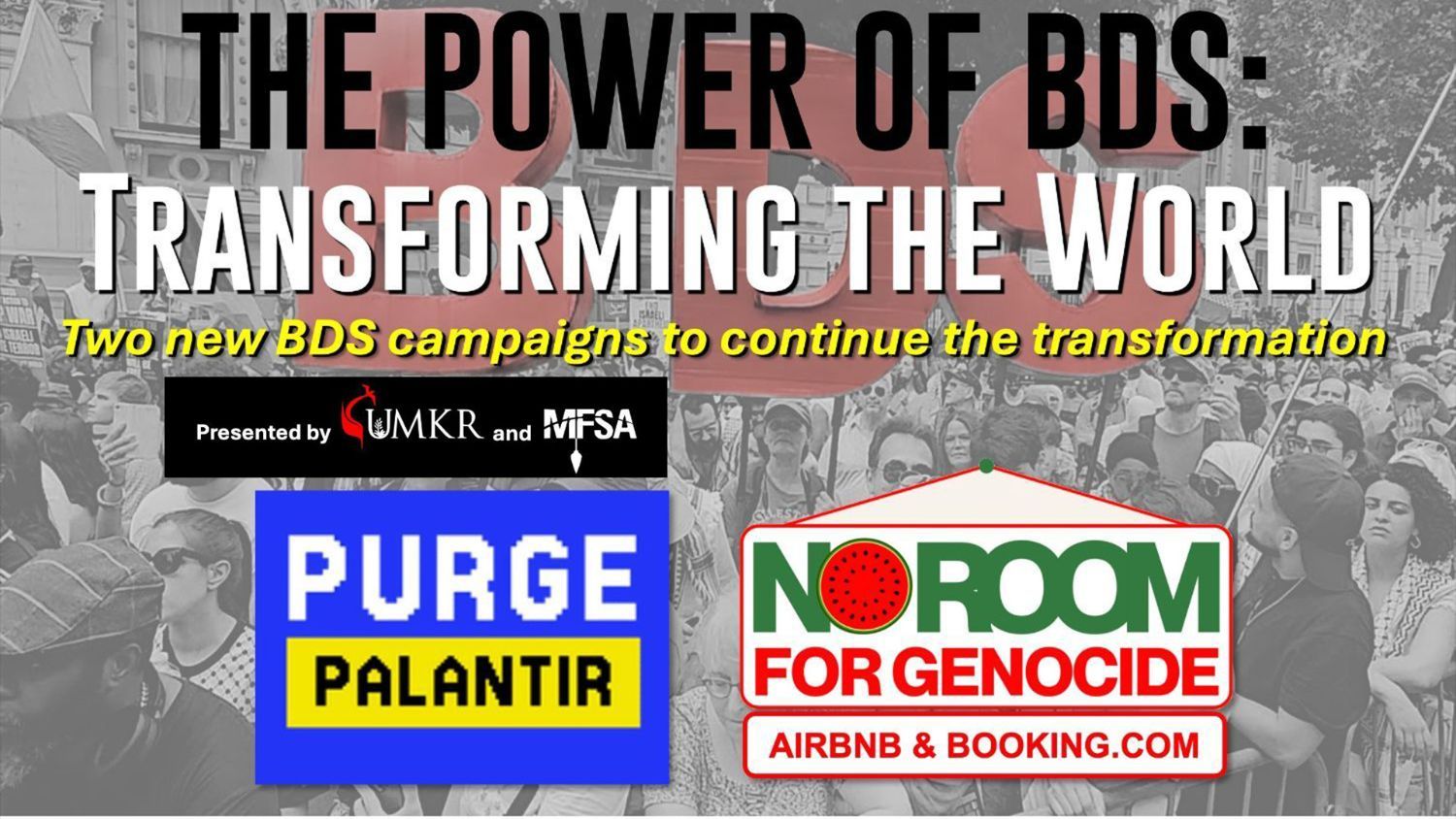 | The Power of BDS: Transforming the World
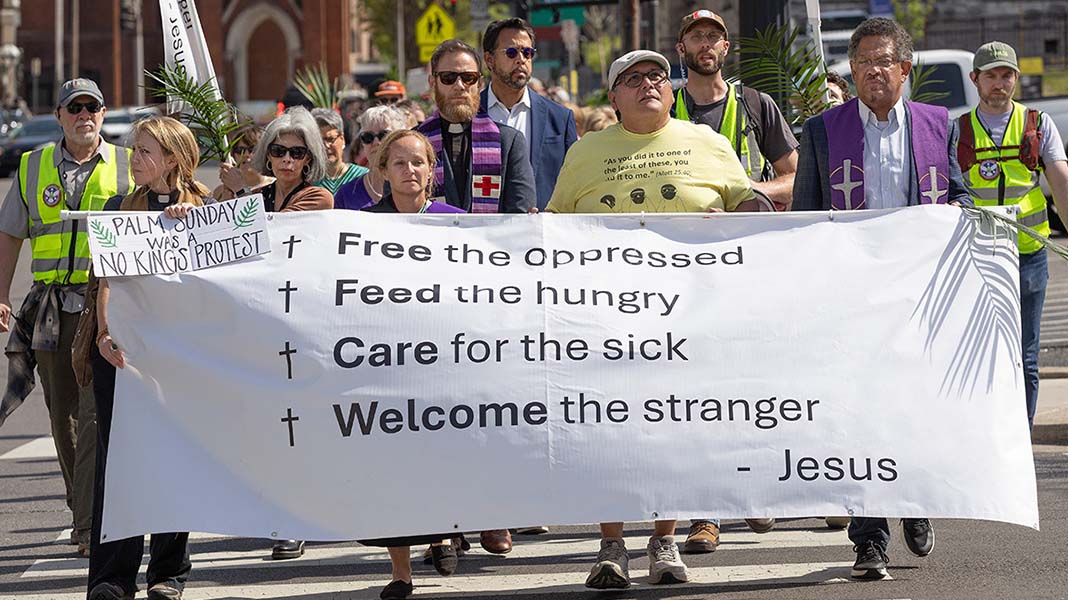
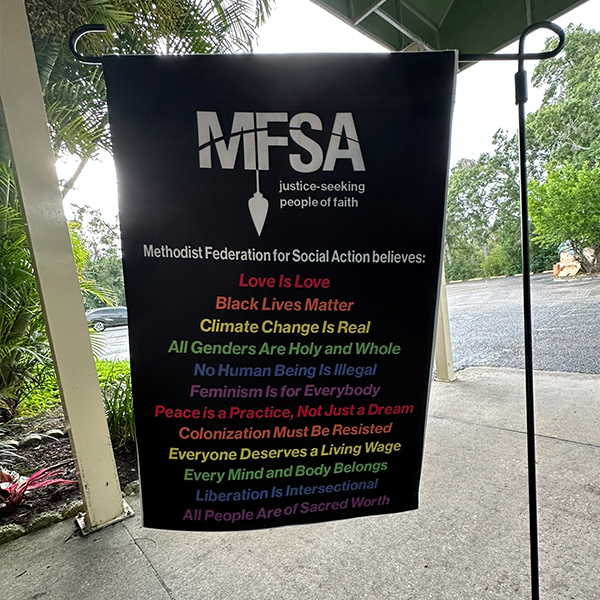
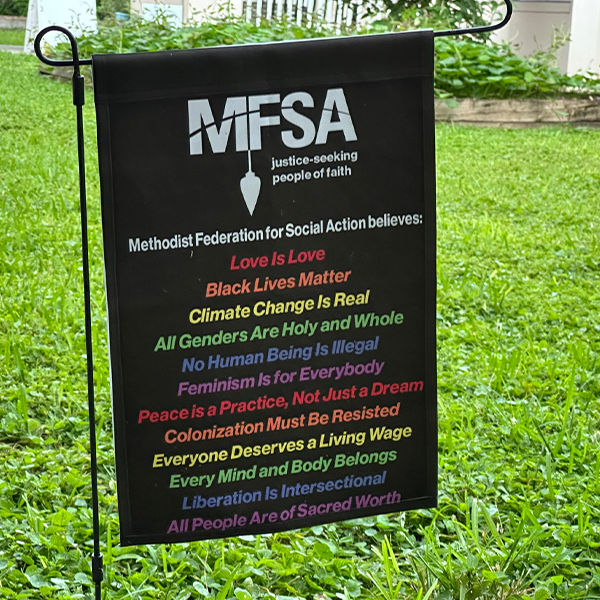
Two new campaigns to continue the transformation Webinar Recording Now Available Presented by United Methodists for Kairos Response (UMKR) and MFSA, the Boycott, Divestment, Sanctions (BDS) movement, an essential pillar of Palestinian freedom, has transformed the global understanding of the question of Palestine. Since 2005, the BDS movement has built a global network with tens of millions of supporters for Palestinian rights. BDS has moved large corporations to end their complicity in Israel's crimes against the Palestinian people. In a webinar recorded on April 15, UMKR and MFSA presented two new campaigns that we know will impact the global conversation about Palestine: PURGE PALANTIR Tech giant Palantir is building tools for mass surveillance to help governments track and target individuals. It is a behemoth that is vacuuming up our data to be used in everything from denial of health insurance claims to unjust deportations and lethal drone strikes. Palantir is used by militaries, police forces, banks, hospitals, and many other businesses. Palantir openly supports Israel's genocide on Gaza and assists their military operations. In the United States, the company helps immigration authorities to target people for deportation and police departments to surveil our communities. This campaign aims to stop this dangerous U.S. company from weaponizing our personal data and using it to oppress and destroy. NO ROOM FOR GENOCIDE Imagine taking a vacation in a territory under military occupation! And in an illegal colony in that territory! That is what Airbnb and Booking.com offer to their customers: rentals in the illegal Israeli settlements in the West Bank. It's time to let these companies know this practice must stop. Everyone who travels can take the pledge to avoid using Airbnb and Booking.com whenever possible. Imagine hosting someone who has been implicated in the Gaza genocide in your home! Those of us who have a rental can take the "Sanctuary of Peace" pledge, to not host war criminals and those who enable genocide. Join us on April 15th to learn from leading organizers of both campaigns. We will also hear from David Wildman, a United Methodist Church leader with decades of in-depth experience in BDS organizing, on the power of this transformational movement. | | | | | | | | | Take Action: Contact Congress Today Our partners at United Methodists for Kairos Response (UMKR) are inviting us to engage in a meaningful act of advocacy. A set of Joint Resolutions of Disapproval in the Senate, along with the Block the Bombs Act in the House, aim to halt the transfer of U.S. weapons—including bombs and armored bulldozers—used in the destruction of Palestinian homes and communities. These measures offer a clear opportunity to interrupt ongoing harm and call U.S. policy back toward accountability and the protection of human life. It can be easy to feel like speaking out won’t make a difference. But public pressure is already shifting the conversation in Congress, and each message adds to that movement. Reaching out is about bearing witness. It lets our leaders know that we see what is happening, that we believe our tax dollars should not fund devastation, and that we are committed to a future shaped by justice, dignity, and peace. | | | | | | | |  | Stories of Hope and Resistance The church has long been a place where justice is not only preached but lived out in times of political and social upheaval. However, with the arrival of a new administration intent on rolling back hard-won rights and freedoms, faith communities across the country are refusing to remain silent. This new section of our newsletter is dedicated to sharing the ways churches are standing firm in their commitment to justice. We're excited to highlight actions and movements within faith communities that resist oppression, embody radical hospitality, and insist on a future where love, dignity, and equity prevail. Whether through direct advocacy, sanctuary efforts, mutual aid, or prophetic witness, these faith communities remind us that another world is possible—and we are called to help create it. If your church is engaged in work that challenges injustice and fosters hope—especially through acts of subversion and resistance against oppressive policies—we want to hear from you. Here are some stories of hope and resistance: | | | | | | | |  | Next Step for UMC Net Zero Agencies: Divest from Fossil Fuels By Sharon Delgado | Fossil Free UMC “Where your treasure is, there your heart will be also.” (Matthew 6:21). In the above passage, Jesus tells us to value spiritual treasures above our material treasures. This passage also reminds us that how we use or invest our material treasures expresses our spiritual values, for “where your treasure is, there your heart will be also.” These words are especially relevant in the context of our rapidly heating planet. We United Methodists have a heart for God’s creation and for climate justice. As I write, the US is enmeshed in a catastrophic war in with Iran that is killing countless people, wreaking havoc on the fossil-fuel-based global economy, creating massive profits for fossil fuel corporations, and multiplying deadly fossil fuel emissions. Tom Englebright writes: “So, here we are blasting the hell out of Iran and, of course, in the process, as all wars do, putting wildly more fossil fuels into the atmosphere. Modern war and preparations for them may, in fact, be the most carbon intensive activity on this ever warming planet of ours.” | | | | | | | | 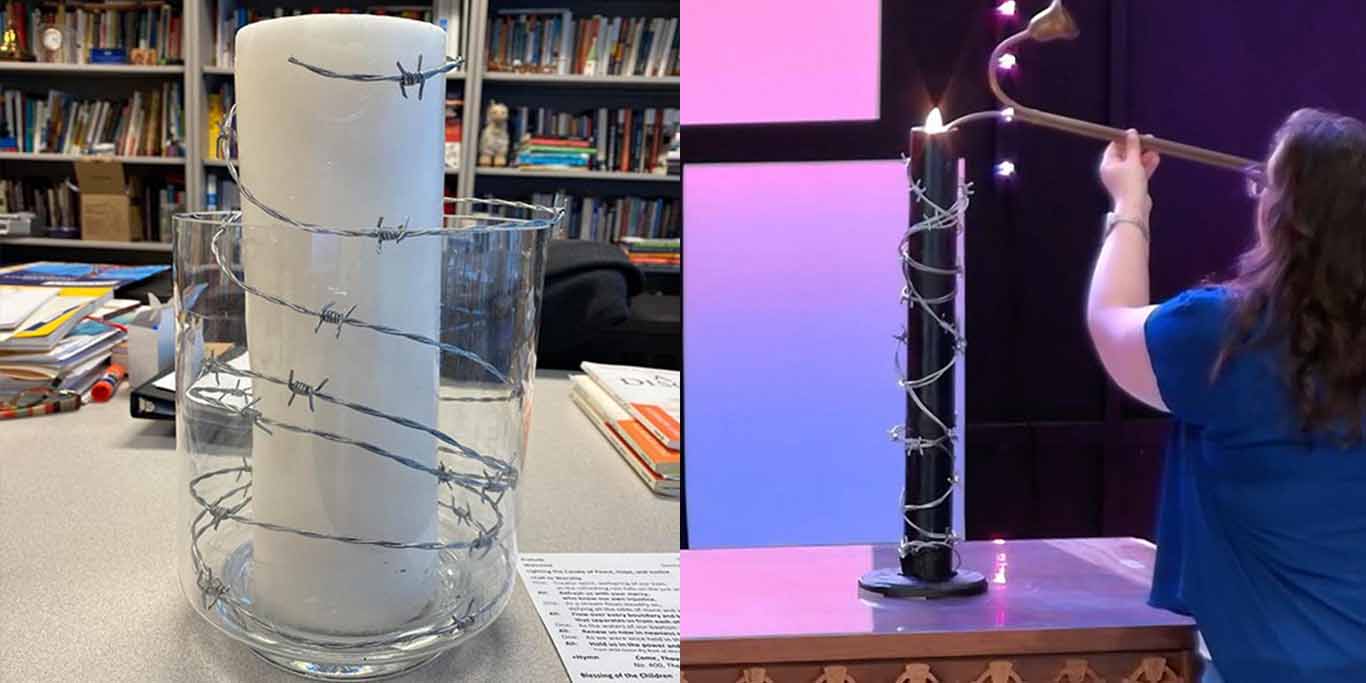 | Lighting the Candle of Peace, Hope, and Justice As we navigate the realities of this new administration, justice-seeking congregations across the country are standing in solidarity with those targeted by oppressive policies. We've seen churches respond by incorporating the Candle of Peace, Hope, and Justice into their worship services, lifting up prayers and commitments to resist injustice. Inspired by the Central Methodist Mission in Johannesburg, which lit a candle encircled in barbed wire during the struggle against apartheid, Rev. Dr. Donna Claycomb Sokol of Mount Vernon Place UMC in Washington, D.C., is one of the pastors who has reintroduced this practice. Rev. Andy Oliver of Allendale UMC in St. Petersburg, Florida, is another. Now, more than 50 congregations—including several MFSA-aligned churches—have joined this movement, lighting a candle each week and naming those suffering under policies of cruelty and exclusion. Recently, churches have lit the candle:
🕯️ For migrants—asylum seekers facing deportation, undocumented families living in fear, and faith leaders offering sanctuary.
🕯️ For federal workers—those losing their jobs, living in uncertainty, or suffering retaliation for speaking out.
🕯️ For USAID—millions impacted by halted humanitarian aid, from hungry children to struggling farmers.
🕯️ For the National Institutes of Health—patients, researchers, and those dependent on lifesaving medical advancements.
🕯️ For the conflict in Ukraine—those enduring war, Russian dissidents, and leaders seeking true peace.
🕯️ For the judicial branch—judges facing threats, courts upholding the rule of law, and those caught in legal battles over justice.
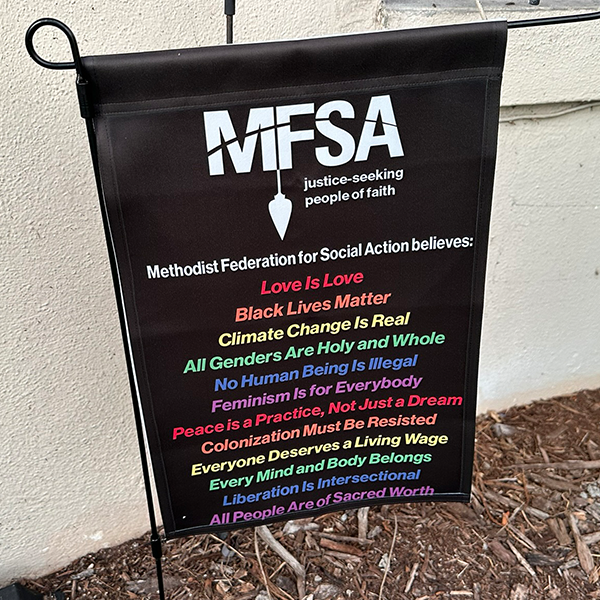
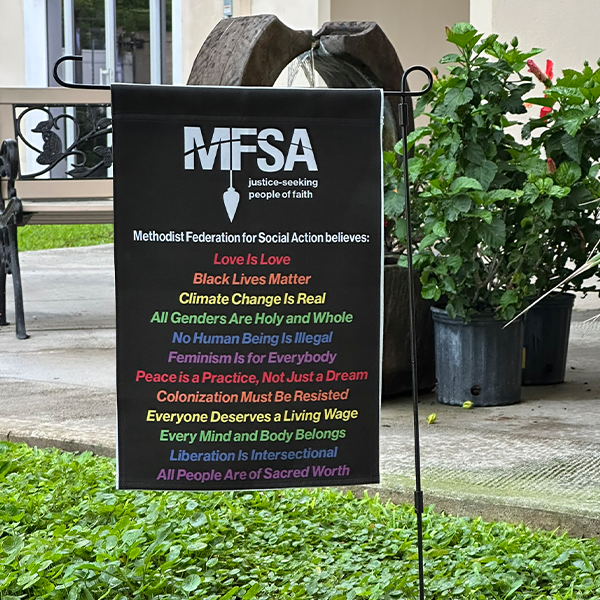
🕯️ For institutions of higher education and students—scholars facing retaliation, lost funding, and threats to free expression. Each time the candle is lit, congregations proclaim that the light shines in the darkness, and the darkness has never overcome the light. You can access the liturgy below. This document will be updated weekly, with liturgy uplifting a new group targeted by this administration. In this moment, as faith communities, we must recommit to resisting evil, injustice, and oppression in all its forms. Together, we will continue to bear witness, proclaim justice, and keep the light shining. | | | | | | | | 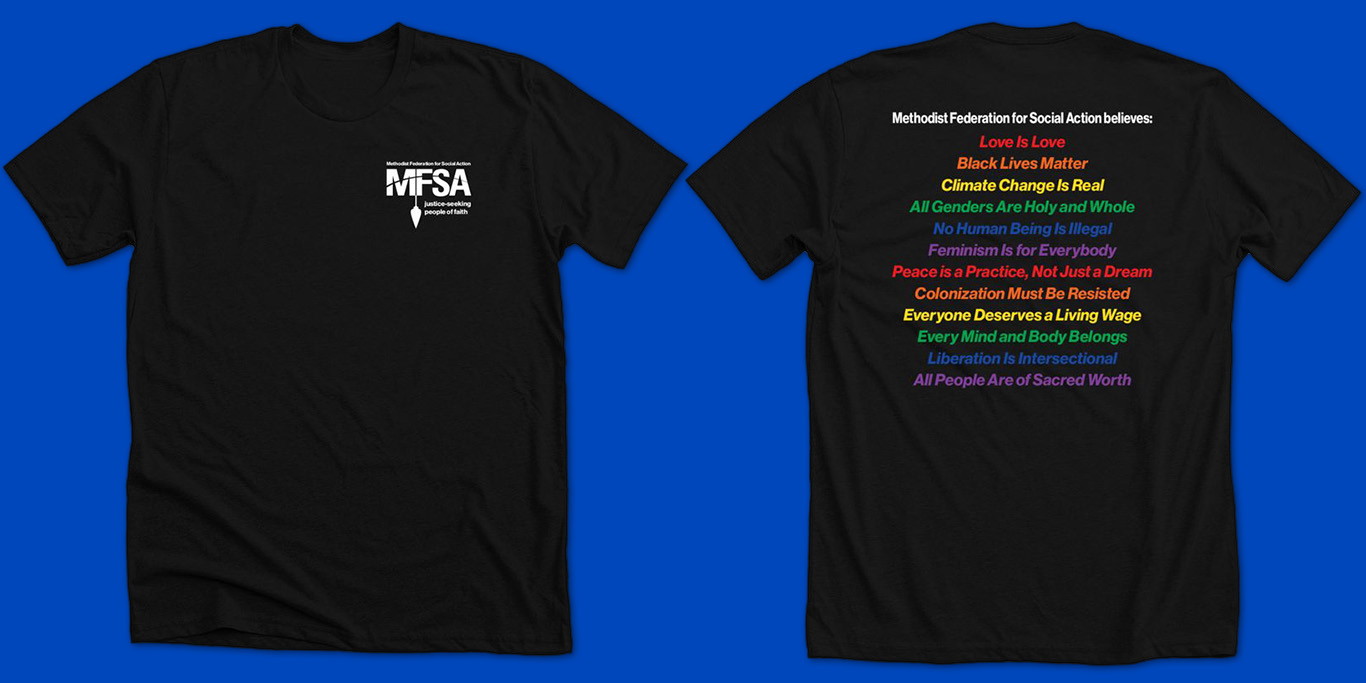 | "We Believe" MFSA T-Shirt and Yard Sign We recently launched a new t-shirt design. Boldly affirm your faith-rooted commitment to justice. Featuring core convictions from our movement, this shirt lifts up the truths we live by as Justice-Seekers. | | | | | | We also just launched a new yard flag, based on our popular t-shirt design! Place this fabric sign in front of your church or home to share these Justice-Seeking truths. | | | | | | | | 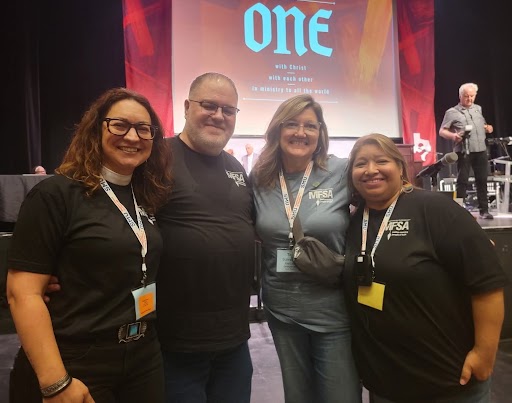 | Since 1907 the Methodist Federation for Social Action (MFSA) has been mobilizing clergy and laity to speak out and take action on the pressing issues of our time. Your support makes this work possible. Becoming a member of MFSA means making a financial contribution to MFSA and joining other activists who care about issues of justice and peace and actively work to make a difference. As a fully donation and member-supported organization, MFSA depends on people like you to sustain our prophetic witness for justice in The United Methodist Church and beyond. When you become a member, you’re not only supporting national and international efforts — 20% of your contribution goes directly to your local MFSA Chapter/Regional Community. If there’s no chapter near you, that portion helps seed and grow new MFSA communities. In a time when the call for justice in our Church and our world is more urgent than ever, MFSA continues to organize, advocate, and witness boldly. Supporting LGBTQIA+ inclusion in The United Methodist Church; raising awareness and building solidarity with Palestine; resisting anti-trans and anti-abortion legislation and advocating for racial, disability, economic, and climate justice, we remain committed to prophetic action grounded in faith. We invite you to join or renew your membership today. Your support sustains our work, fuels our organizing, and strengthens our collective voice. | | | | | | | |  | Call Your Representatives and Demand Accountability We are reminded that respect for the office does not mean silence in the face of harm. Our democracy is under threat, and our most vulnerable communities are at risk. Now is the time to speak up—call your representatives and demand accountability. | | | | | | | |  | MFSA is on Bluesky We've noticed many of our friends and partners making the move to this platform, and we're thrilled to join the conversation there. Stay connected with us for updates, advocacy, and conversations that matter. Connect with us @mfsavoices.org | | | | | | | |  | | | | | | | | | | | | |  | | | | | | | | |