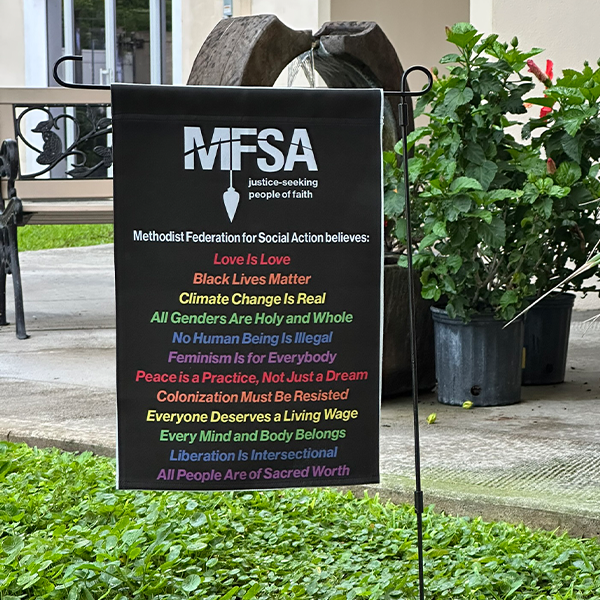
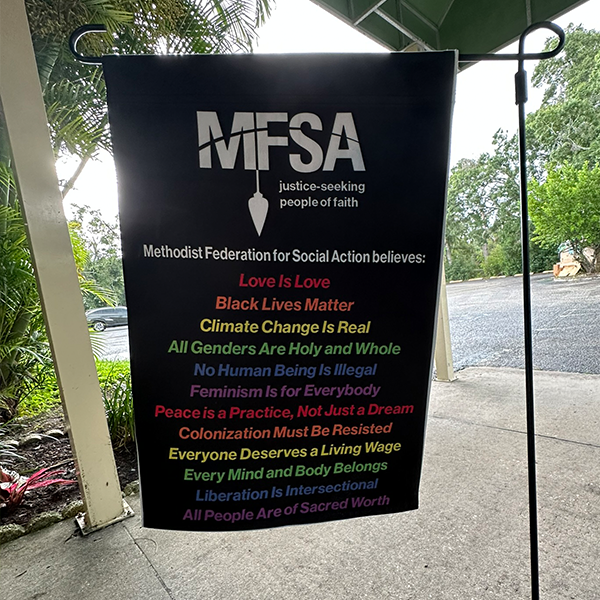
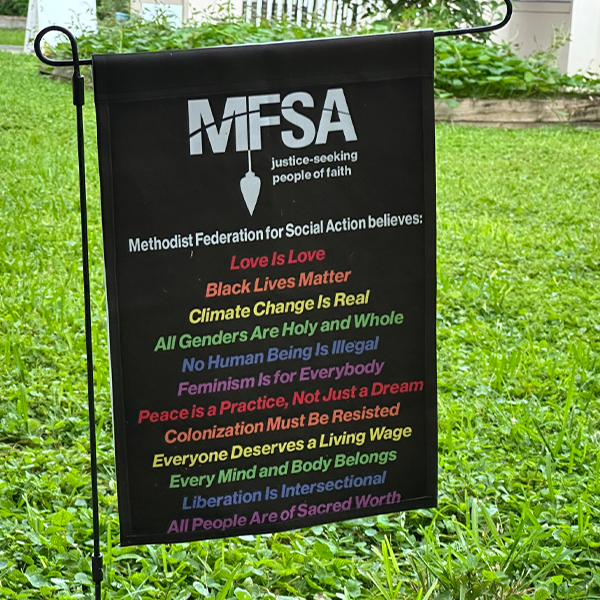
| |  | | | Dear Justice-Seeker, This issue of MFSAVoices is jam-packed with resources and information. So much so that it won't all fit in your email message so be sure to click view entire message at the bottom of this email to view the entire issue. Our newsletters are designed to be used all month long. So take a quick glance and take note of important dates to add to your calendar but also come back in the following weeks to work your way through the action items. Gmail users—move us to your primary inbox - On your phone? Click the 3 dots at the top right corner, click "Move to" then "Primary"
- On your desktop? Back out of this email then drag and drop this email into the "Primary" tab near the top left of your screen
We continue to see the urgency of our work to make broad systemic change. Change that honors the dignity and worth of all people, puts people over money, and honors the earth and all her inhabitants. Since 1907, MFSA has been shining a light on injustice and organizing to change it. You make our collective work possible by your witness for justice every day in your church, community, and Annual Conference. MFSA does not receive any financial support from the United Methodist Church's giving channels. 100% of our budget is funded through your membership dues and your generosity in giving. | | | | | | 2026 Lent Devotional When the Breeze Won’t Let Us Stay the Same By Rev. Melissa Hinnen, Park Slope United Methodist Church | | | | Nicodemus said to him, "How can anyone be born after having grown old?
Can one enter a second time into the mother's womb and be born?" John 3:1-17 | | Witness a sacred meeting
under the cover of darkness.
Honest conversation flows. Murmurs of curiosity and confusion rise up,
punctuated by inflections
of questions answered by questions. Do you hear the breeze
that stirs up the familiar scent
of punitive earthly laws?
Is there another way? Possibilities emerge
during divine encounters.
The atmosphere shifts.
Winds of change refresh creation with
showers of restorative justice. Will you resist transformation
like a wailing newborn
yearning for comfort of the womb?
Or will you taste the sweet fruit
of God’s liberating love for the whole world
to be born again through saving grace? | | | | Rev. Melissa Hinnen is a United Methodist ordained elder in the NY Annual Conference. Since 2019, she has served the Park Slope Brooklyn Community through her appointment with Park Slope United Methodist Church. She also coordinates the Good News Cooperative Parish in Downtown Brooklyn, NY in partnership with Heart of Life UMC. She regularly writes 100 Word Sermons and posts them online at https://greatermessage.substack.com/. | | | | Park Slope United Methodist Church is a Brooklyn-based, justice-seeking congregation rooted in radical welcome, community, and social transformation. Located in the heart of Park Slope, they are a diverse, family-friendly church committed to inclusion across race, gender identity, sexual orientation, age, and life experience. At Park Slope UMC, faith is something lived together. Through worship, study, service, and shared life, they build relationships across generations and engage both their neighborhood and the wider world with a commitment to equity, dignity, and care for the most vulnerable. As an LGBTQ-affirming congregation, they seek to embody Christ’s love without barriers, welcoming all on their journey. | | | | | | Called to Witness:
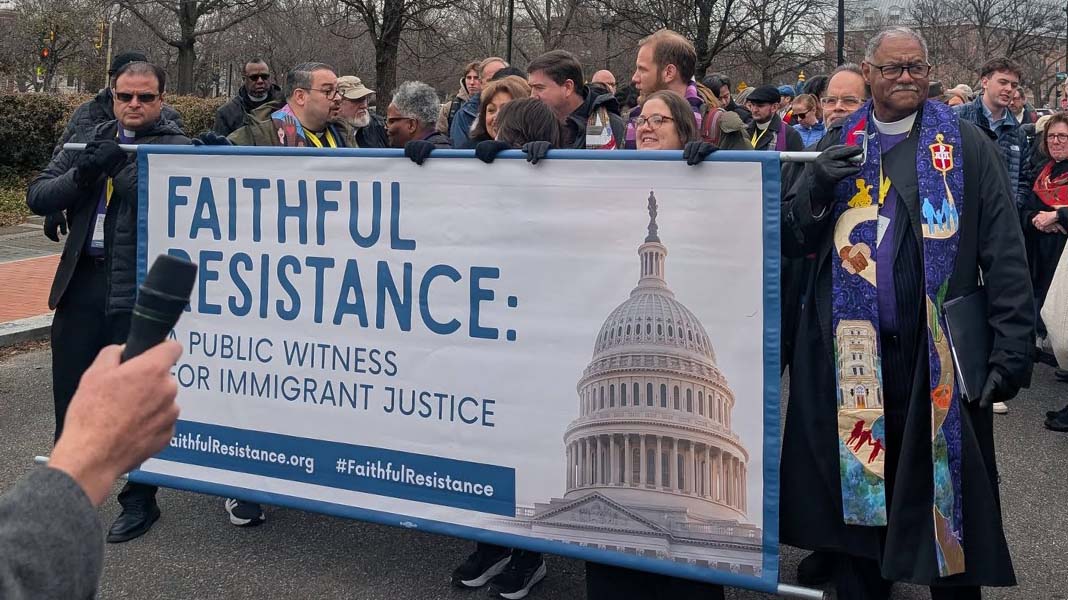
Faithful Nonviolent Resistance for Followers of Christ By Connor Prusha, MFSA Organizing Associate Clergy are being arrested outside detention facilities. Denominations are filing First Amendment lawsuits against federal immigration enforcement. Congregations from Manhattan to Los Angeles are posting "ICE-free zone" signs and training rapid response teams. This surge of coordinated response to the dangerous and harmful actions of the Trump administration is part of a mobilization of Christians at a scale unseen since the civil rights movement. For United Methodists, the call to faithful nonviolent resistance emerges from our deepest theological convictions. John Wesley refused to separate personal piety from social transformation, writing that "the gospel of Christ knows of no religion, but social; no holiness but social holiness.”[1] The 2024 General Conference codified this heritage when delegates adopted Social Principles explicitly supporting civil disobedience against unjust laws, provided such witness remains nonviolent and respects human dignity. We live with the uncomfortable truth that charity without justice offers comfort without courage, leaving us practicing only half the gospel. The need for leadership is critical, but fear and hesitation remain in the hearts of many. How can we move from conviction to action? The Current Landscape of Faithful Nonviolent Resistance The Trump administration's January 2025 decision to rescind "sensitive locations" protections ignited immediate response from faith communities nationwide. The Institute for Constitutional Advocacy and Protection at Georgetown Law Center filed suit on behalf of twenty-seven religious bodies, arguing First Amendment violations.[2] United Methodist congregations are among those answering the summons. St. Paul & St. Andrew UMC in Manhattan reactivated its sanctuary ministry begun under the first Trump presidency.[3] Rev. Hannah Kardon, a United Methodist pastor in Chicago, was shot with pepper balls while praying outside Broadview ICE Detention Facility this past October.[4] Her clerical collar was visible. Her witness and resolve were undeniable. The Tennessee-Western Kentucky Annual Conference, along with numerous others, passed a 2024 resolution denouncing Christian Nationalism, joining a groundswell of denominational voices actively distinguishing displays of patriotism from religious and political idolatry. These are just some of the ways people of faith are standing up today, but it's by no means a new process. Understanding the Framework Gene Sharp, a political scientist whose research influenced nonviolent justice movements from Poland to the Philippines, documented 198 distinct methods of nonviolent action.[5] The vast majority require no special training and carry no legal risks. These range from making public statements, signing petitions and attending vigils to joining marches, participating in boycotts, and engaging in strategic noncooperation. All allow an individual to withdraw consent from systems that harm God's children and make visible what the powers that be prefer to conceal. Erica Chenoweth, a leading researcher on civil resistance at Harvard, discovered in years of research that no justice movement has failed once 3.5% of the population actively participated in it.[6] Just three and a half percent. It often feels like we need everyone to be involved to make progress, but that’s not the case. We need committed people willing to show up consistently and raise their voice. Our connection as United Methodists makes us perfectly suited for this work. We already organize in small groups. We already embrace a shared mission. We already believe that the Body of Christ functions because its many members come together with different gifts. What is required is the prayerful effort, energy, and engagement to get involved. How to Get Involved in Faithful Nonviolent Resistance Nonviolent resistance is in the DNA of who we are as followers of Jesus Christ. Just as there is no single injustice or evil in the world, there is no single way to participate. Your involvement will look different depending on your physical abilities, financial situation, geographic location, family responsibilities, and risk tolerance. What matters is finding an entry point that fits your situation while allowing you to show up consistently. The following options represent a spectrum of engagement, and all of them matter. Show Up in Person Vigils, marches, and prayer gatherings are happening regularly across the country. Certain chapters of The Poor People's Campaign host weekly "Moral Witness Wednesday" actions and coordinate gatherings in over 32 states. If you live in a rural area, consider organizing a local prayer vigil at your courthouse or drive to the largest metropolitan area nearby to join a march. Sometimes the most powerful changes are made where people least expect them. Form or Join an Affinity Group An affinity group is a small circle of eight to twelve people who prepare together, act together, and support one another. These groups can form within your congregation, in an ecumenical gathering of local churches, or online among people in different places. Some members may attend protests. Others may handle behind-the-scenes logistics, manage a social media presence, create a text or phone chain to distribute information, coordinate childcare, or provide emotional support to those unable to attend. The person ensuring everyone has water contributes as meaningfully as the person holding a sign. Start by identifying three or four people who share your concerns. The Fellowship of Reconciliation provides excellent free training materials and resources. Document and Bear Witness Legal observers document interactions between demonstrators and law enforcement, creating crucial evidence if civil rights are violated. You can also document what happens in your own community. If you witness an ICE raid, record it from a safe distance. If your congregation experiences harassment, keep detailed records. This work transforms isolated incidents into patterns that courts and journalists can examine. The National Lawyers Guild offers legal observer training in many cities. Train Your Congregation "Know Your Rights" trainings have become more popular as traditional protections for sensitive areas like churches have been stripped away. They’re a great way to take the anxiety and frustration you may be feeling and turn them into a sense of confidence and preparedness. Sanctuary Faith provides a plethora of resources for congregants, clergy leaders, and congregation members seeking more information on responding to ICE, template signage, and rapid response protocols. You might consider hosting a training during Sunday school or a Wednesday gathering. Role-playing different scenarios, as some United Methodist churches have already done, can help church members feel prepared rather than panicked. Give Money Strategically Financial support remains one of the most accessible forms of participation for those who cannot attend protests or other demonstrations due to work, health, caregiving, or distance. Consider recurring monthly donations to organizations like MFSA, Faith in Action, the Poor People's Campaign, or the Immigration Law and Justice Network. Local immigrant defense funds also need support. Even modest contributions add up when many people give consistently. Educate Yourself Effective advocacy requires understanding how systems work. Learning about your First Amendment rights to free speech and assembly, as well as Fourth Amendment protections against unreasonable searches, can make a difference when you are making a public witness. It’s vital to understand how immigration enforcement operates and what options you have to legally and nonviolently challenge unjust and/or illegal actions. The ACLU's "Know Your Rights" resources and UM News’ compilation of scenarios for United Methodists provide accessible explanations. UM News has also compiled several Taking time to educate yourself prepares you to speak clearly, act wisely, and help others understand what is at stake. The Invitation Before Us I return often to the principles that have shaped MFSA's long history of prophetic Christian witness. Our willingness to stand up for what is right matters more than preserving the structures and institutions around us. Faith and action belong together, rooted in prayer. All issues of equity and justice are intersectional. Our resilience and hope help define us. Dr. King identified the heart of nonviolent resistance as one that seeks to defeat evil, never persons. It accepts suffering rather than inflicting it. Going on to perfection in love is always at its center. That love compels me and beckons to me, and I know it does to you, too. What steps will we take this week? In whatever ways you choose to show up and get involved, know that they make a difference and move us toward Beloved Community one action at a time. "Little children, let's not love with words or speech but with action and truth." — 1 John 3:18 CEB [1] John Wesley, "Preface to Hymns and Sacred Poems (1739)," in The Works of John Wesley, ed. Franz Hildebrandt and Oliver A. Beckerlegge, vol. 7 (Nashville: Abingdon Press, 1983), 74. [2] Institute for Constitutional Advocacy and Protection, Georgetown Law, "More Than Two Dozen Christian and Jewish Denominations and Associations Sue to Protect Religious Freedoms," press release, February 11, 2025, https://www.law.georgetown.edu/icap/wp-content/uploads/sites/32/2025/02/Sensitive-Locations-Press-Release-2.11.25-AM.pdf. [3] Cynthia B. Astle, "United Methodists Mobilizing to Aid Immigrants in Face of Trump Orders," United Methodist Insight, January 29, 2025, https://um-insight.net/in-the-world/advocating-justice/united-methodists-mobilizing-to-aid-immigrants-in-face-of-tr/. [4] Mira Wassef, "Clergy Say Religious Rights Are Under Attack Inside and Outside the Broadview ICE Facility," WBEZ Chicago, October 23, 2025, https://www.wbez.org/immigration/2025/10/23/clergy-say-religious-rights-are-under-attack-inside-and-outside-the-broadview-ice-facility. [5] Gene Sharp, The Politics of Nonviolent Action (Boston: Porter Sargent, 1973). [6] Erica Chenoweth, "The Success of Nonviolent Civil Resistance," TEDxBoulder, September 21, 2013, https://www.youtube.com/watch?v=YJSehRlU34w. | |  Connor Prusha (he/him/his) serves as an Organizing Associate for the Methodist Federation for Social Action (MFSA). He is a nonprofit professional with 4+ years of experience in fundraising, program administration, grantmaking, communications, and community organizing. Connor also serves as Lead, Philanthropy at United Methodist Communications. He is a Certified Candidate for Ordained Ministry in the East Ohio Conference and is a Master of Divinity student at Drew Theological School. He holds a Bachelor of Arts in Communication Studies from Baldwin Wallace University and a Master of Public Administration from Bowling Green State University (OH). Connor is deeply passionate about bringing people together and creating safe spaces that promote a holistic approach to Christ-centered justice and community healing. Connor Prusha (he/him/his) serves as an Organizing Associate for the Methodist Federation for Social Action (MFSA). He is a nonprofit professional with 4+ years of experience in fundraising, program administration, grantmaking, communications, and community organizing. Connor also serves as Lead, Philanthropy at United Methodist Communications. He is a Certified Candidate for Ordained Ministry in the East Ohio Conference and is a Master of Divinity student at Drew Theological School. He holds a Bachelor of Arts in Communication Studies from Baldwin Wallace University and a Master of Public Administration from Bowling Green State University (OH). Connor is deeply passionate about bringing people together and creating safe spaces that promote a holistic approach to Christ-centered justice and community healing. | | | | | |  | Stories of Hope and Resistance The church has long been a place where justice is not only preached but lived out in times of political and social upheaval. However, with the arrival of a new administration intent on rolling back hard-won rights and freedoms, faith communities across the country are refusing to remain silent. This new section of our newsletter is dedicated to sharing the ways churches are standing firm in their commitment to justice. We're excited to highlight actions and movements within faith communities that resist oppression, embody radical hospitality, and insist on a future where love, dignity, and equity prevail. Whether through direct advocacy, sanctuary efforts, mutual aid, or prophetic witness, these faith communities remind us that another world is possible—and we are called to help create it. If your church is engaged in work that challenges injustice and fosters hope—especially through acts of subversion and resistance against oppressive policies—we want to hear from you. Here are some stories of hope and resistance: | | | | | | | | 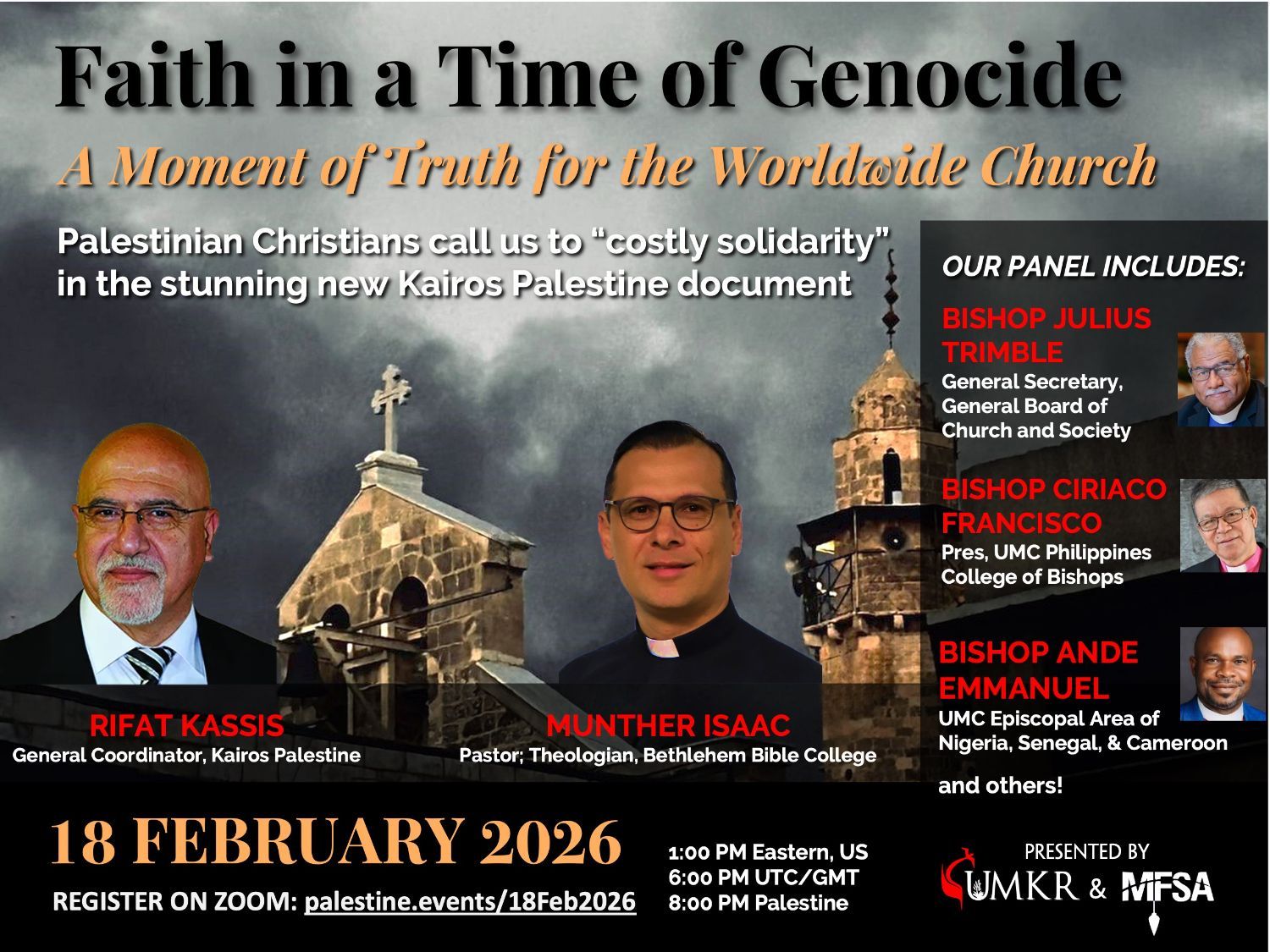 | Webinar Recording - Faith in a Time of Genocide:
A Moment of Truth for the Worldwide Church
Palestinian Christians call us to "costly solidarity" in the stunning new Kairos Palestine document Presented by UMKR and MFSA, the February 2026 webinar explored Kairos Palestine II as a major turning point in the Palestinian Christian liberation movement and a challenge to Christians worldwide. Building on the original 2009 Kairos Palestine “Moment of Truth” document, speakers reflected on the second manifesto, released in November 2025 from Bethlehem, A Moment of Truth: Faith in a Time of Genocide. The document named the realities of genocide, apartheid, racism, and settler colonialism faced by Palestinians and called the global church to honest reckoning and action. Speaking from Palestine, Rifat Kassis, General Coordinator of Kairos Palestine, and Rev. Munther Isaac, pastor, theologian, and Academic Dean at Bethlehem Bible College, unpacked the document’s core themes and its call to “costly solidarity.” United Methodist leaders from multiple continents responded from their own contexts, and UMKR leadership reflected on what this call means for United Methodist witness and solidarity going forward. | | | | | | 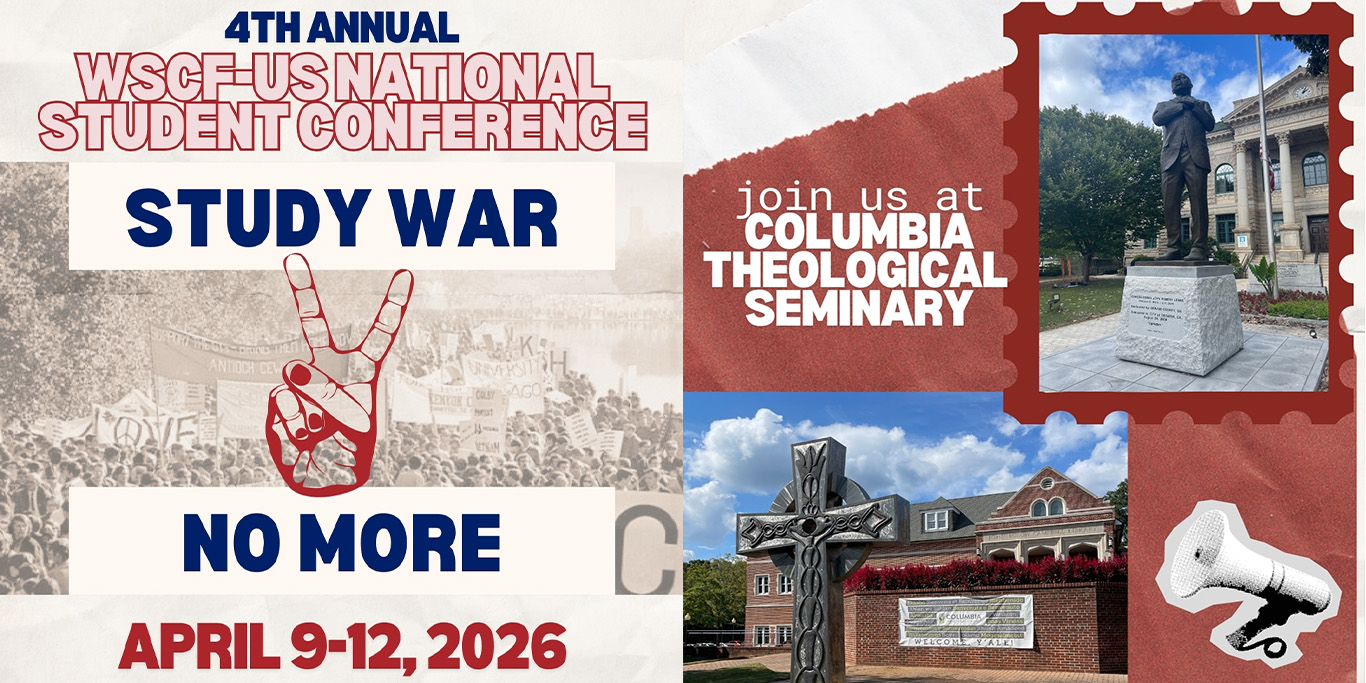 | 2026 WSCF-US National Student Conference:
Study War No More The World Student Christian Federation–US (WSCF-US) invites students and young adults to gather April 9–12, 2026 at Columbia Theological Seminary in Decatur, Georgia for its National Student Conference, Study War No More. Rooted in the prophetic vision of Isaiah and Micah—calling communities to turn away from violence and learn a different way—this conference centers Christian peacemaking in a world shaped by fear, militarism, and injustice. Drawing from a long tradition of faith-based resistance, the conference brings together young Christians from across the U.S. and around the world who are committed to living out the way of Jesus through nonviolence, solidarity, and justice. Through panels, action-oriented workshops, worship, and small-group conversations, participants will explore what it means to resist systems that produce harm and to practice peace in their campuses, churches, and communities. The gathering is designed to be accessible and formative. Students will leave more deeply rooted in their faith, connected to a global movement, and equipped to live prophetically—naming violence honestly while organizing for transformation. If you are a student or young adult longing for faithful community and courageous action, this space is for you. Lend your voice to the conversation. Conference Details Cost (includes meals) -
Students & non-student young adults: $100 -
Campus ministers, chaplains, higher-ed or denominational staff, WSCF friends & alumni: $250 + housing Housing note: Lodging is provided at no additional cost for students and non-student young adults traveling from outside the Atlanta area. WSCF-US is exploring housing options for other attendees and will share updates as available. About WSCF-US
The World Student Christian Federation is a global network of nearly 100 student movements. In the U.S., WSCF-US organizes Christian students who are radically inclusive, globally engaged, and grounded in prophetic biblical and theological traditions—living faith boldly in a pivotal moment. | | | | | | | | 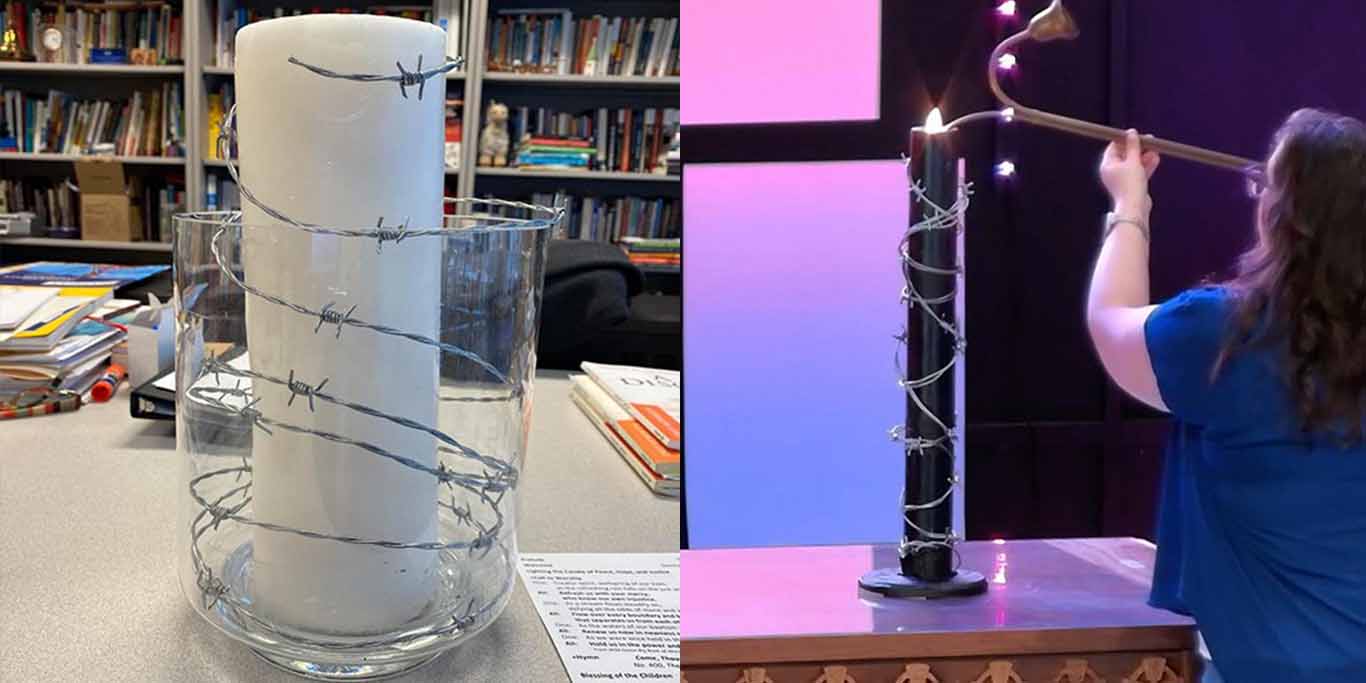 | Lighting the Candle of Peace, Hope, and Justice As we navigate the realities of this new administration, justice-seeking congregations across the country are standing in solidarity with those targeted by oppressive policies. We've seen churches respond by incorporating the Candle of Peace, Hope, and Justice into their worship services, lifting up prayers and commitments to resist injustice. Inspired by the Central Methodist Mission in Johannesburg, which lit a candle encircled in barbed wire during the struggle against apartheid, Rev. Dr. Donna Claycomb Sokol of Mount Vernon Place UMC in Washington, D.C., is one of the pastors who has reintroduced this practice. Rev. Andy Oliver of Allendale UMC in St. Petersburg, Florida, is another. Now, more than 50 congregations—including several MFSA-aligned churches—have joined this movement, lighting a candle each week and naming those suffering under policies of cruelty and exclusion. Recently, churches have lit the candle:
🕯️ For migrants—asylum seekers facing deportation, undocumented families living in fear, and faith leaders offering sanctuary.
🕯️ For federal workers—those losing their jobs, living in uncertainty, or suffering retaliation for speaking out.
🕯️ For USAID—millions impacted by halted humanitarian aid, from hungry children to struggling farmers.
🕯️ For the National Institutes of Health—patients, researchers, and those dependent on lifesaving medical advancements.
🕯️ For the conflict in Ukraine—those enduring war, Russian dissidents, and leaders seeking true peace.
🕯️ For the judicial branch—judges facing threats, courts upholding the rule of law, and those caught in legal battles over justice.
🕯️ For institutions of higher education and students—scholars facing retaliation, lost funding, and threats to free expression. Each time the candle is lit, congregations proclaim that the light shines in the darkness, and the darkness has never overcome the light. You can access the liturgy below. This document will be updated weekly, with liturgy uplifting a new group targeted by this administration. In this moment, as faith communities, we must recommit to resisting evil, injustice, and oppression in all its forms. Together, we will continue to bear witness, proclaim justice, and keep the light shining. | | | | | | | |  | "We Believe" MFSA T-Shirt and Yard Sign We recently launched a new t-shirt design. Boldly affirm your faith-rooted commitment to justice. Featuring core convictions from our movement, this shirt lifts up the truths we live by as Justice-Seekers. | | | | | | We also just launched a new yard flag, based on our popular t-shirt design! Place this fabric sign in front of your church or home to share these Justice-Seeking truths. | | | | | | | |  | Since 1907 the Methodist Federation for Social Action (MFSA) has been mobilizing clergy and laity to speak out and take action on the pressing issues of our time. Your support makes this work possible. Becoming a member of MFSA means making a financial contribution to MFSA and joining other activists who care about issues of justice and peace and actively work to make a difference. As a fully donation and member-supported organization, MFSA depends on people like you to sustain our prophetic witness for justice in The United Methodist Church and beyond. When you become a member, you’re not only supporting national and international efforts — 20% of your contribution goes directly to your local MFSA Chapter/Regional Community. If there’s no chapter near you, that portion helps seed and grow new MFSA communities. In a time when the call for justice in our Church and our world is more urgent than ever, MFSA continues to organize, advocate, and witness boldly. Supporting LGBTQIA+ inclusion in The United Methodist Church; raising awareness and building solidarity with Palestine; resisting anti-trans and anti-abortion legislation and advocating for racial, disability, economic, and climate justice, we remain committed to prophetic action grounded in faith. We invite you to join or renew your membership today. Your support sustains our work, fuels our organizing, and strengthens our collective voice. | | | | | | | | 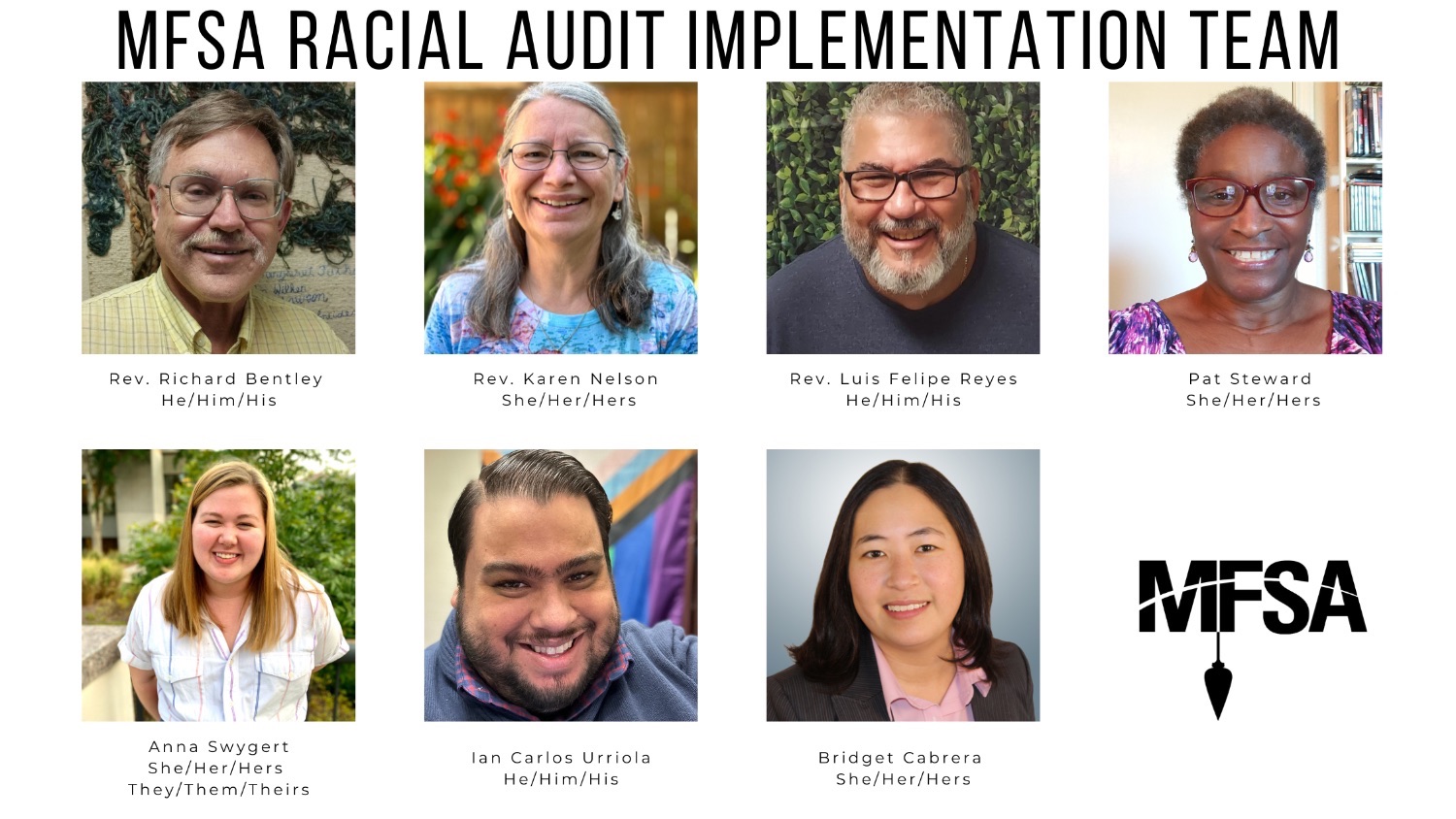 | Racial Audit Implementation Team Update "We Have Not Finished Yet..." by Patricia Stewart Note: In June 2023, the Methodist Federation for Social Action (MFSA) Board of Directors established the Racial Audit Implementation Team to carry forward the recommendations from the comprehensive Racial Audit. This work represents our deep commitment to becoming an anti-racist organization. Patricia Stewart is a member of that team, and this reflection is part of our collective journey to name, confront, and transform the white dominant culture within MFSA. It emerges from ongoing conversations centered on six key themes/patterns of white supremacy identified within our organization. These are the entrenched patterns we are actively working to disrupt as we move toward the liberation and equity we seek. We are sharing these reflections and insights publicly with our movement because accountability, transparency, and shared learning are essential to dismantling white supremacy. We know that transformation does not happen in isolation. By sharing our process, struggles, and growth, we hope to invite our broader community into this work with us—offering tools, solidarity, and space for mutual reflection as we continue building a more just and faithful movement. In the Methodist tradition, justifying grace is one of the ways God’s grace moves in our lives. It refers to the moment when a person accepts God’s offer of forgiveness, and through Christ, is reconciled with God. This is not the end of the spiritual journey, but rather a turning point, a reorientation toward new life, community, and justice. Justifying grace reminds us that while grace is freely given, it calls us into ongoing transformation. As a member of the original Racial Audit Task Force, I learned a lot about the history of MFSA. I studied documents, read interviews with those involved in the past, and helped conduct a survey of current participants. Throughout all of this, I learned MFSA was — and is — not perfect. As an organization, it has at times been a strong vehicle for justice, but at other times... | | | | | | | | | |  | Call Your Representatives and Demand Accountability We are reminded that respect for the office does not mean silence in the face of harm. Our democracy is under threat, and our most vulnerable communities are at risk. Now is the time to speak up—call your representatives and demand accountability. | | | | | | | |  | MFSA is now on Bluesky We've noticed many of our friends and partners making the move to this platform, and we're thrilled to join the conversation there. Stay connected with us for updates, advocacy, and conversations that matter. Connect with us @mfsavoices.org | | | | | | | |  | | | | | | | | | | | | |  | | | | | | | | | Contact Us Methodist Federation for Social Action
996 Maine Ave SW #307
Washington, District of Columbia 20024
(202) 240-2546
[email protected] | | | | | | | |