| |  | | |  | Dear Justice-Seeker, This issue of MFSAVoices is jam-packed with resources and information. So much so that it won't all fit in your email message so be sure to click view entire message at the bottom of this email to view the entire issue. Our newsletters are designed to be used all month long. So take a quick glance and take note of important dates to add to your calendar but also come back in the following weeks to work your way through the action items. Gmail users—move us to your primary inbox - On your phone? Click the 3 dots at the top right corner, click "Move to" then "Primary"
- On your desktop? Back out of this email then drag and drop this email into the "Primary" tab near the top left of your screen
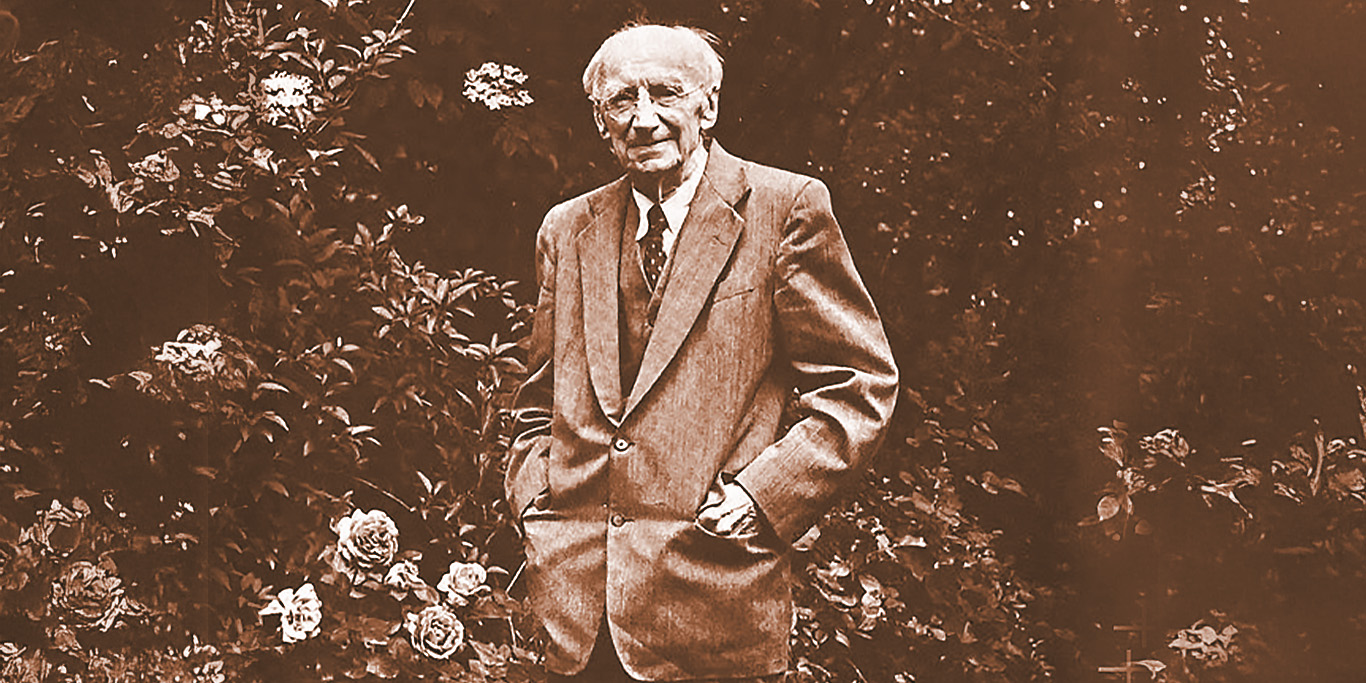
We continue to see the urgency of our work to make broad systemic change. Change that honors the dignity and worth of all people, puts people over money, and honors the earth and all her inhabitants. Since 1907, MFSA has been shining a light on injustice and organizing to change it. You make our collective work possible by your witness for justice every day in your church, community, and Annual Conference. MFSA does not receive any financial support from the United Methodist Church's giving channels. 100% of our budget is funded through your membership dues and your generosity in giving. | | | | | | The Church's Conscience: MFSA's Witness for a Just Democracy By Connor Prusha I was visiting a new church a while ago when a bulletin insert caught my eye. It announced the church's food pantry expansion, written with genuine compassion about serving families in crisis. Beautiful words about feeding the hungry and loving our neighbors. I held that bulletin while the congregation prayed for those struggling to make ends meet. Just days before, Congress had failed to pass a continuing resolution, sending the country into a government shutdown. It didn't take long for this crisis to be weaponized. SNAP benefit cuts that would push hundreds of thousands of families toward hunger were implemented, and a renewal of a policy that would maintain low healthcare premiums for low-income Americans was nowhere to be seen. Many of those served by this food pantry would be the people directly impacted by these decisions. They were the same neighbors we were praying for. The compassion and kindness were evident, but something was troubling me. This congregation was preparing to offer this outpouring of charity but still remained silent about the systems creating the crisis. My hands tightened around that bulletin. Something wasn't adding up. How could we claim to follow Jesus while refusing to challenge the policies that manufacture poverty, hunger, and oppression? How could we feed people on Sunday yet ignore the legislators taking food from their tables on Monday? MFSA itself was born from an expression of grief transformed into Gospel-rooted action. In December 1907, Methodist leaders gathered in Washington because they could no longer remain silent about the suffering of working people around the country. Among them was Harry F. Ward, a Chicago pastor and later co-founder of the American Civil Liberties Union (ACLU), who had conducted funerals for packinghouse workers killed in factory accidents.¹ He knew their names. He knew their families. He knew that his faith demanded him to do more than pray at gravesides. It demanded a response that would prevent the next funeral. The Social Creed he drafted, as such, was an act of pastoral care extended to an entire nation. When Jesus told the parable of the Good Samaritan, he showed us that loving our neighbors crosses boundaries, challenges systems, and requires that we stop walking past the suffering we see. Justice, MFSA has always proclaimed, is the love of God made tangible in public life. During the civil rights movement , MFSA answered with that same theological clarity. In 1939, when Methodist churches reunited under a racially segregated jurisdictional system, MFSA opposed it with everything we had. Mary McLeod Bethune, founder of Bethune-Cookman College and a four-time delegate to the General Conference, joined the MFSA Executive Committee, vigorously advocating for the elimination of the segregated Central Jurisdiction. In 1945, MFSA required all its chapters to organize regionally, completely disregarding jurisdictional separations. We integrated the Federation while the broader church remained divided. We did this because we knew segregation was a deep manifestation of systemic sin. We believed the good news proclaimed in Galatians that “There is neither Jew nor Gentile, neither slave nor free, nor is there male and female, for you are all one in Christ Jesus." That same prophetic courage and willingness to be out of step with the institution for the sake of the Gospel has also shaped MFSA's peace witness for peace. Peace is the vocation of all who follow the Prince of Peace. In 1963, Harry F. Ward, at ninety years old, signed an open letter to President Kennedy calling for the removal of American forces from Vietnam. Decades later, MFSA Executive Director Kathryn Johnson was arrested during an interfaith witness at the White House opposing the Iraq War. Nearly 4,000 Christians joined the Christian Peace Witness for Iraq in 2007, processing from the National Cathedral to the White House. These bodies bearing witness to the justice of the Kin-dom of God engaged in a manifested liturgy and tangible act of discipleship. Jesus taught that peacemakers are blessed, that they shall be called children of God. MFSA took, and continues to take, that teaching seriously enough to risk our reputation and institutional standing. MFSA brought that same persistence to another struggle. We advocated for LGBTQIA+ persons when the denomination declared their very existence "incompatible with Christian teaching." We did this because we believed that God created each person with a sacred worth that could not be defined or quantified. God's love knows no exceptions. In May 2024, that long faithfulness bore fruit. The General Conference voted to eliminate the 52-year-old discriminatory language. MFSA members and our advocacy partners wept. We had lived to see the church finally repent of its sin, knowing that the work of reconciliation was just beginning. Today, we face a situation that calls us to embrace the same moral courage that has defined our movement throughout its existence. Religious language is being weaponized to restrict voting rights, dismantle protections for workers, separate families seeking refuge, and legislate transgender people out of public life. Proposals like Project 2025 explicitly call for a system of government based on "biblical principles" while simultaneously seeking to eliminate civil rights protections and gut our social safety nets. This is a distortion of Christian life and belief. This is faith twisted to serve power instead of people. Jesus warned us about false prophets who come in sheep's clothing. He taught us to recognize them by their fruits. When the fruit of someone's theology is hunger, exclusion, and suffering, we know it does not come from the God of liberation. Scripture tells us exactly where God stands. In the oft-quoted words of Matthew 25, Jesus identifies himself with the hungry, the stranger, the sick, and the imprisoned: "Whatever you did for one of the least of these brothers and sisters of mine, you did for me." When religious rhetoric harms those Jesus called "the least of these," we are witnessing a betrayal of the gospel. We know that an authentic faith prompts us to stand boldly with the oppressed. We have stood with workers on picket lines, with civil rights marchers facing firehoses, with LGBTQIA+ siblings demanding recognition of their sacred worth. We do this because our Wesleyan theology teaches that love of God and love of neighbor are inseparable, and that love calls us to action in both public and private ways. I no longer have that bulletin insert, but what it represents often lingers in my mind. It’s a reminder that expressions of Christian charity without pursuing justice risk leading us toward an incomplete discipleship. Food pantries matter and meet critical needs that save lives. But if we stop there, if we feed people while remaining silent about the policies that starve them, we are offering comfort without courage. We are practicing only half of the gospel. Our faith cannot remain private while injustice reigns and continues to do harm in public. When voting becomes harder for Black and brown communities, when refugees are denied asylum, when workers lose the right to organize, when transgender people are erased from public life, we must recognize these as true spiritual crises that demand a proper spiritual and prophetic response. This is what it means to be the church's conscience. Not standing apart in judgment, but standing alongside those who suffer, insisting that our prayers must shape our advocacy. Paul wrote to the Corinthians that we are all members of one body, and when one part suffers, every part suffers with it. This is the truth MFSA seeks to live out every single day. We love our neighbors through our words and actions. We speak truth to power. We defend the dignity of every person. We challenge the systems that produce suffering, and we build sacred communities that embody the agape love of God. Together, we practice social holiness. Together, we refuse to let fear or apathy define what being a follower of Christ means. | | ¹ Ward's legacy is not without complication. In 1928, he published an article advocating for eugenics, a position he never publicly recanted. In 2016, the General Conference of The United Methodist Church adopted Resolution #3184, formally condemning eugenics and repenting for past support of the movement by church leaders, including Ward. MFSA honors Ward's contributions to social justice while acknowledging this deeply troubling aspect of his legacy. For more information, see: umc.org/en/content/unsung-heroes-of-methodism-harry-f-ward | | 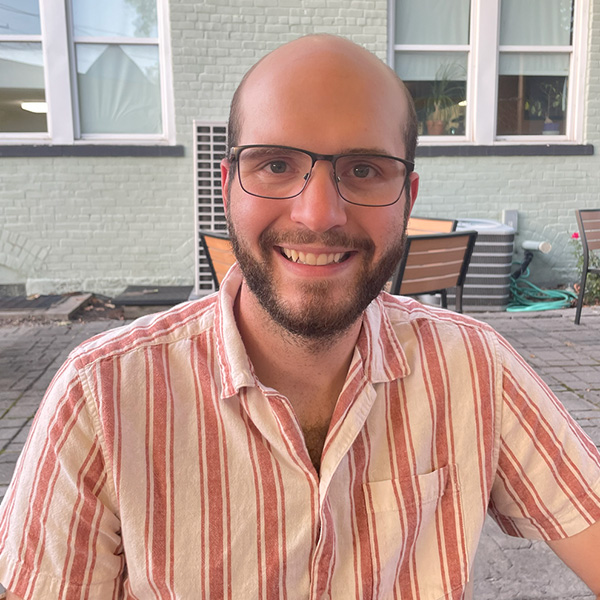 Connor Prusha (he/him/his) serves as an Organizing Associate for the Methodist Federation for Social Action (MFSA). He is a nonprofit professional with 4+ years of experience in fundraising, program administration, grantmaking, communications, and community organizing. Connor also serves as Lead, Philanthropy at United Methodist Communications. He is a Certified Candidate for Ordained Ministry in the East Ohio Conference and is a Master of Divinity student at Drew Theological School. He holds a Bachelor of Arts in Communication Studies from Baldwin Wallace University and a Master of Public Administration from Bowling Green State University (OH). Connor is deeply passionate about bringing people together and creating safe spaces that promote a holistic approach to Christ-centered justice and community healing. Connor Prusha (he/him/his) serves as an Organizing Associate for the Methodist Federation for Social Action (MFSA). He is a nonprofit professional with 4+ years of experience in fundraising, program administration, grantmaking, communications, and community organizing. Connor also serves as Lead, Philanthropy at United Methodist Communications. He is a Certified Candidate for Ordained Ministry in the East Ohio Conference and is a Master of Divinity student at Drew Theological School. He holds a Bachelor of Arts in Communication Studies from Baldwin Wallace University and a Master of Public Administration from Bowling Green State University (OH). Connor is deeply passionate about bringing people together and creating safe spaces that promote a holistic approach to Christ-centered justice and community healing. | | | | | | | | Unsung Heroes of Methodism: Harry F. Ward By Philip J. Brooks | UMC.org Harry F. Ward was a Methodist pastor and one of the leading social activists of the Early 20th century. He helped found and lead the Methodist Federation for Social Action (MFSA), co-authored the Social Creed, and served as the first chairman of the American Civil Liberties Union (ACLU). Ward devoted his life to service and advocacy for the poor and defended the right of all people to free speech. Yet his legacy remains complicated. Harry Frederick Ward was born outside London, England, in 1873. His father was a lay pastor in the Methodist Church of Great Britain. At 17, Ward left home and immigrated to the United States, settling in Utah, where he worked as a farmhand and driver until he saved enough money to attend the college. Ward graduated from Northwestern University in Evanston, Illinois in 1897 and pursued graduate studies in philosophy at Harvard University. | | | | | | | | 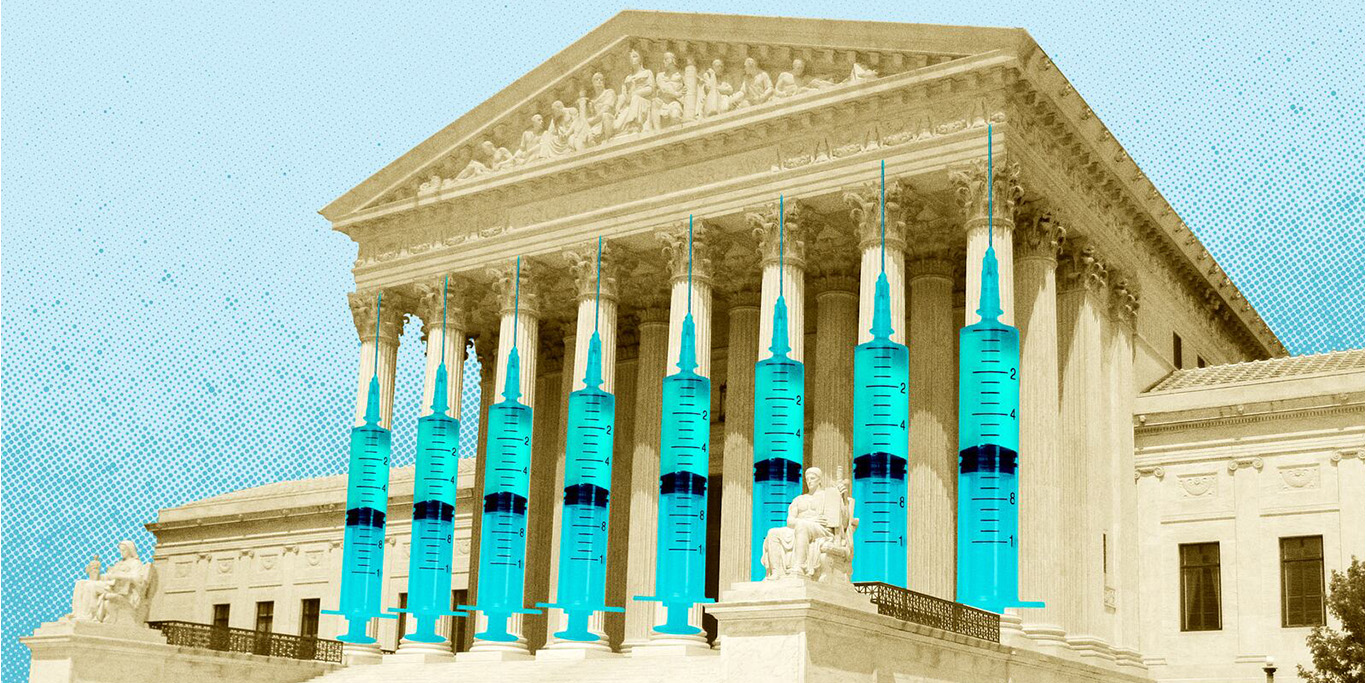 | MFSA Joins Broad Interfaith Coalition to Defend Public Health
Against Efforts to Weaken Vaccination Laws Americans United for Separation of Church and State, joined by 11 religious and civil rights organizations, urged the U.S. Court of Appeals for the 9th Circuit to protect public health from religion-based attacks. In an amicus brief filed in the lawsuit Royce v. Pan, AU and allies urged the court to reject a request brought by a Christian Nationalist organization on behalf of a handful of California parents seeking religious exemptions from the state’s vaccination requirements for public school children. Religious freedom is not a license to subvert vaccination laws and threaten public health “Religious freedom is never a right to put other people’s lives at risk,” said Rachel Laser, president and CEO of Americans United. “This fundamental American freedom ensures that we are all treated equally under the law and allowed to live as ourselves and believe as we choose – as long as we don’t harm others. It is not a license to subvert state vaccination laws and threaten public health.” | | | | | | | |  | Stories of Hope and Resistance The church has long been a place where justice is not only preached but lived out in times of political and social upheaval. However, with the arrival of a new administration intent on rolling back hard-won rights and freedoms, faith communities across the country are refusing to remain silent. This new section of our newsletter is dedicated to sharing the ways churches are standing firm in their commitment to justice. We're excited to highlight actions and movements within faith communities that resist oppression, embody radical hospitality, and insist on a future where love, dignity, and equity prevail. Whether through direct advocacy, sanctuary efforts, mutual aid, or prophetic witness, these faith communities remind us that another world is possible—and we are called to help create it. If your church is engaged in work that challenges injustice and fosters hope—especially through acts of subversion and resistance against oppressive policies—we want to hear from you. Here are some stories of hope and resistance: | | | | | | | | 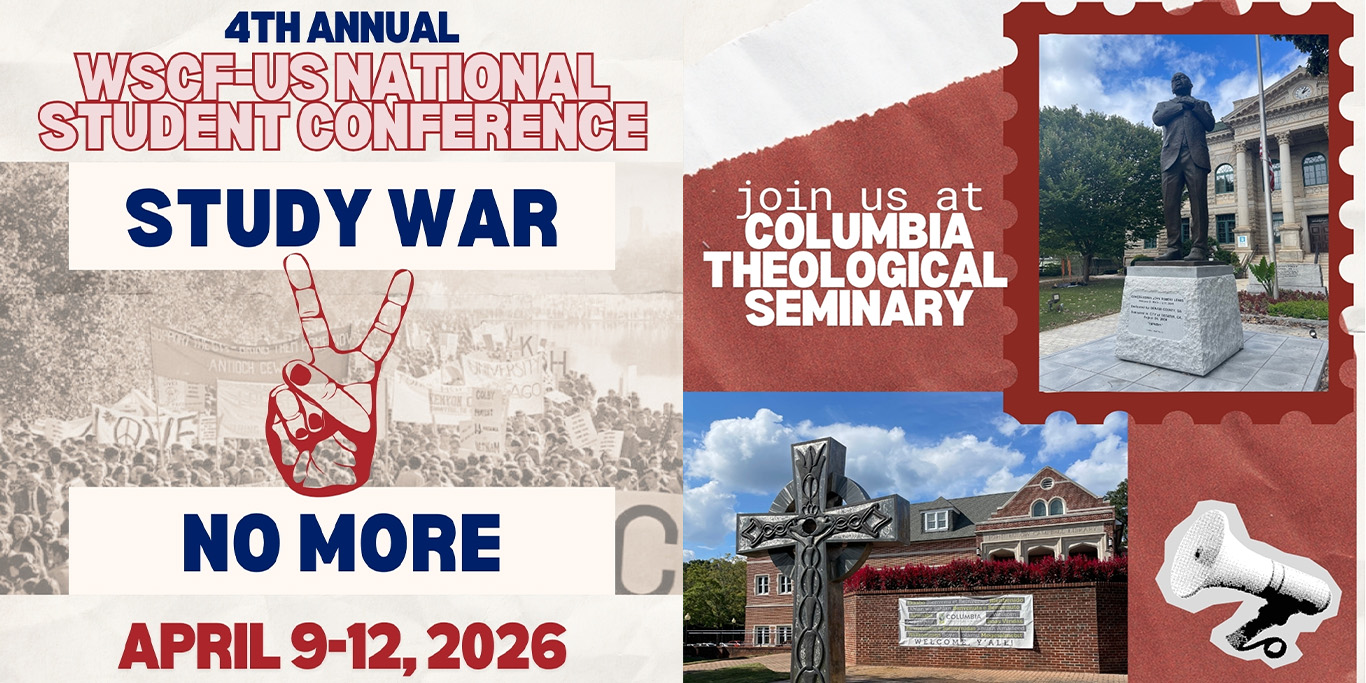 | World Student Christian Federation-US 2026
Spring Conference is coming to Atlanta Join WSCF-US on the campus of Columbia Theological Seminary in Atlanta, GA on April 9-12, 2026 for the 4th annual WSCF-US National Student Conference, Study War No More! Take up the Biblical charge to learn war no more (Isaiah 2:3-4) in fellowship with young Christians from around the US and the world. Learn about our prophetic Christian heritage and root your resistance to militarism and systemic violence more deeply in your faith.
Mark your calendars. More details to come. Please share widely with college, seminary, and grad school students! | | | | | | | | | | Bishops Prioritize Creation Care By Julie Dwyer | UM News The United Methodist Church’s bishops remain committed to caring for God’s world, and they call on fellow United Methodists to join in this urgent work. During its fall meeting on Nov. 4, the Council of Bishops adopted a response to the United Methodist Creation Justice Movement’s open letter asking the bishops to prioritize creation care and environmental stewardship. “God promises no harm, and as people who follow the ways of God, we too are committed to do no harm to any part of God’s creation,” the bishops said in the letter. The bishops affirmed their commitment to implementing the decisions made at the 2024 General Conference, including creating Green Teams in churches, districts and conferences. They also agreed to implement sustainable practices at annual conferences and in managing church properties, and joined the United Methodist commitment to Net Zero Green House Gas Emissions, among other actions. | | | | | | | | 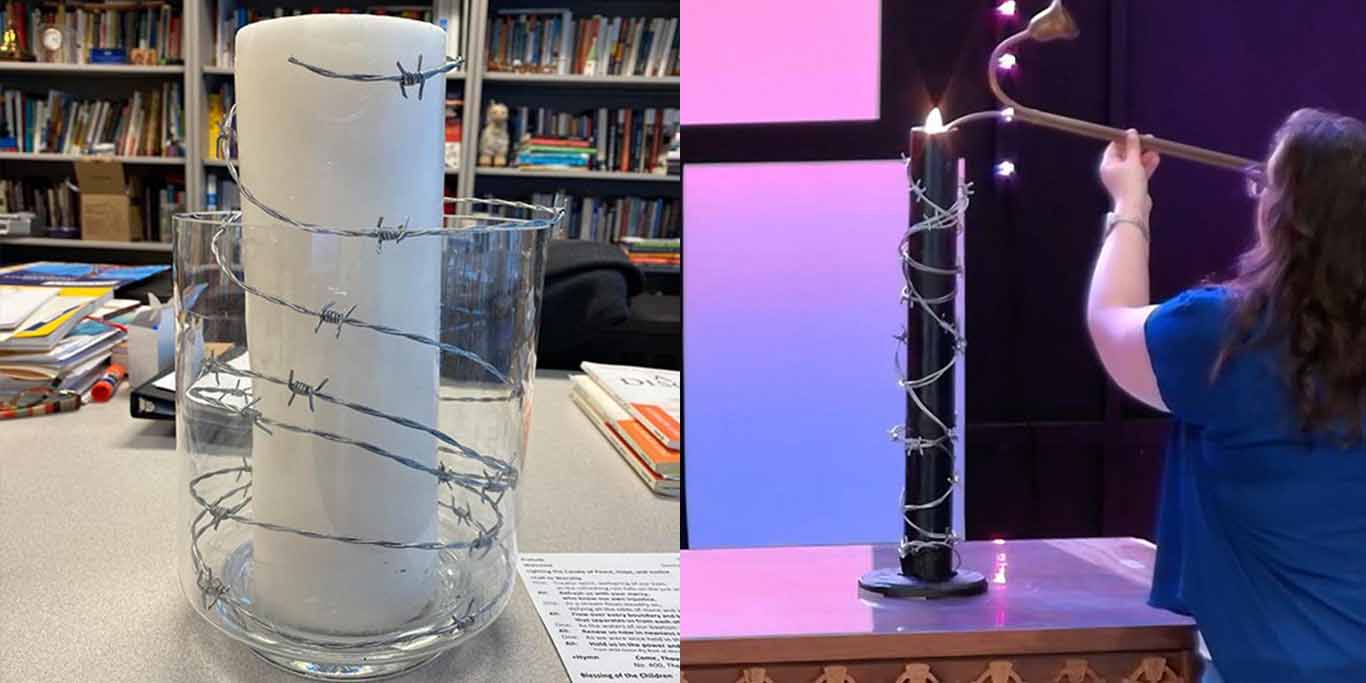 | Lighting the Candle of Peace, Hope, and Justice As we navigate the realities of this new administration, justice-seeking congregations across the country are standing in solidarity with those targeted by oppressive policies. We've seen churches respond by incorporating the Candle of Peace, Hope, and Justice into their worship services, lifting up prayers and commitments to resist injustice. Inspired by the Central Methodist Mission in Johannesburg, which lit a candle encircled in barbed wire during the struggle against apartheid, Rev. Dr. Donna Claycomb Sokol of Mount Vernon Place UMC in Washington, D.C., is one of the pastors who has reintroduced this practice. Rev. Andy Oliver of Allendale UMC in St. Petersburg, Florida, is another. Now, more than 50 congregations—including several MFSA-aligned churches—have joined this movement, lighting a candle each week and naming those suffering under policies of cruelty and exclusion. Recently, churches have lit the candle:
🕯️ For migrants—asylum seekers facing deportation, undocumented families living in fear, and faith leaders offering sanctuary.
🕯️ For federal workers—those losing their jobs, living in uncertainty, or suffering retaliation for speaking out.
🕯️ For USAID—millions impacted by halted humanitarian aid, from hungry children to struggling farmers.
🕯️ For the National Institutes of Health—patients, researchers, and those dependent on lifesaving medical advancements.
🕯️ For the conflict in Ukraine—those enduring war, Russian dissidents, and leaders seeking true peace.
🕯️ For the judicial branch—judges facing threats, courts upholding the rule of law, and those caught in legal battles over justice.
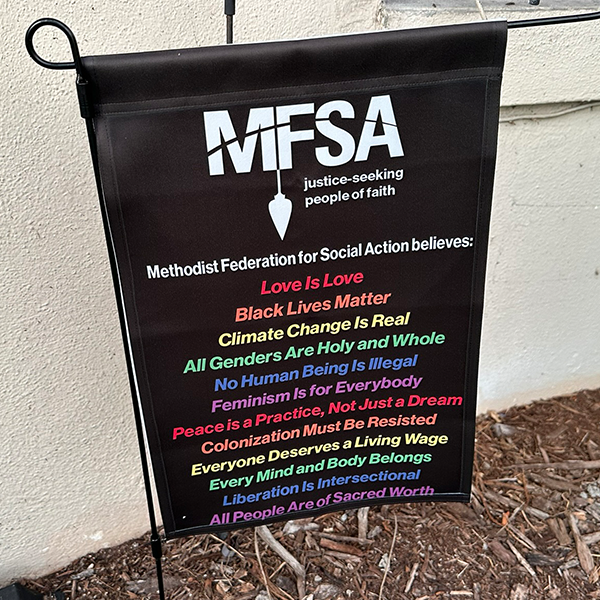
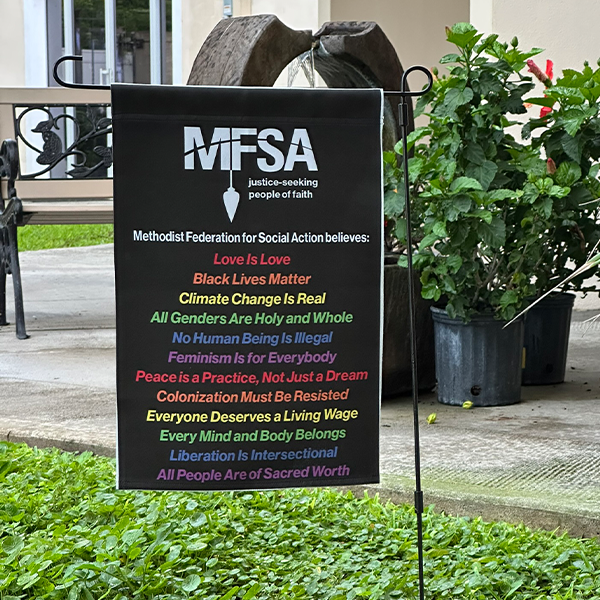
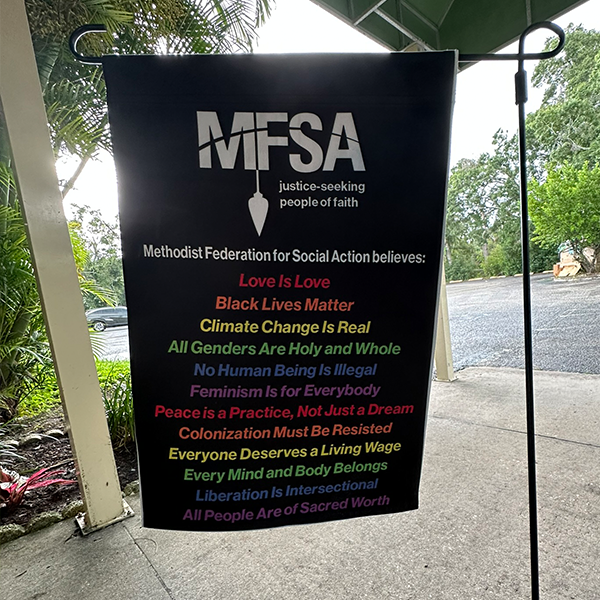
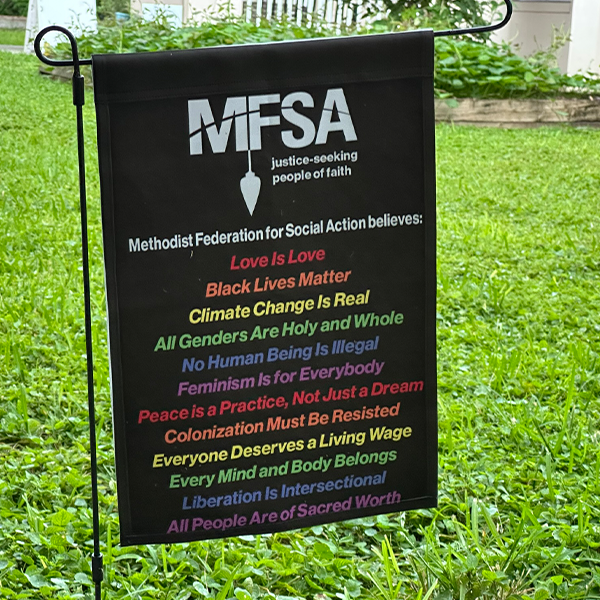
🕯️ For institutions of higher education and students—scholars facing retaliation, lost funding, and threats to free expression. Each time the candle is lit, congregations proclaim that the light shines in the darkness, and the darkness has never overcome the light. You can access the liturgy below. This document will be updated weekly, with liturgy uplifting a new group targeted by this administration. In this moment, as faith communities, we must recommit to resisting evil, injustice, and oppression in all its forms. Together, we will continue to bear witness, proclaim justice, and keep the light shining. | | | | | | | | 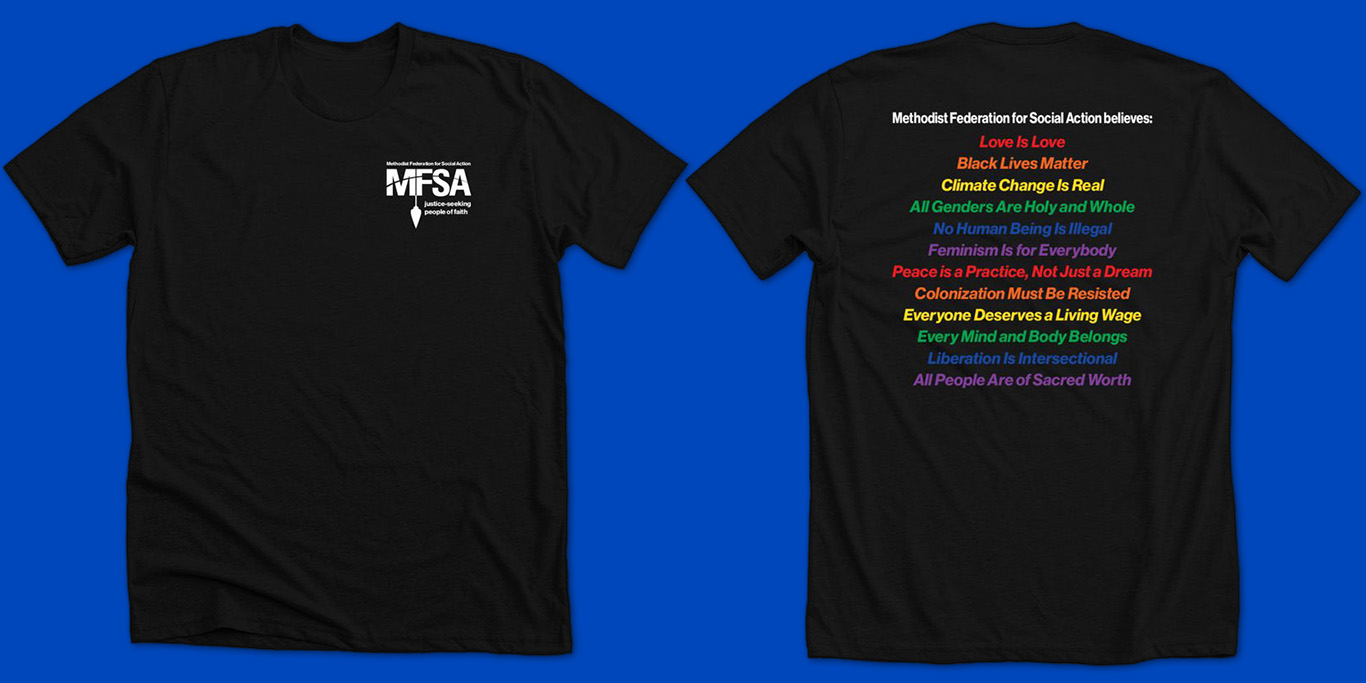 | "We Believe" MFSA T-Shirt and Yard Sign We recently launched a new t-shirt design. Boldly affirm your faith-rooted commitment to justice. Featuring core convictions from our movement, this shirt lifts up the truths we live by as Justice-Seekers. | | | | | | We also just launched a new yard flag, based on our popular t-shirt design! Place this fabric sign in front of your church or home to share these Justice-Seeking truths. | | | | | | | | 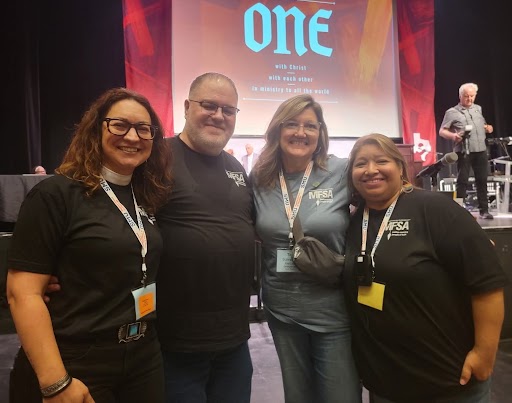 | Since 1907 the Methodist Federation for Social Action (MFSA) has been mobilizing clergy and laity to speak out and take action on the pressing issues of our time. Your support makes this work possible. Becoming a member of MFSA means making a financial contribution to MFSA and joining other activists who care about issues of justice and peace and actively work to make a difference. As a fully donation and member-supported organization, MFSA depends on people like you to sustain our prophetic witness for justice in The United Methodist Church and beyond. When you become a member, you’re not only supporting national and international efforts — 20% of your contribution goes directly to your local MFSA Chapter/Regional Community. If there’s no chapter near you, that portion helps seed and grow new MFSA communities. In a time when the call for justice in our Church and our world is more urgent than ever, MFSA continues to organize, advocate, and witness boldly. Supporting LGBTQIA+ inclusion in The United Methodist Church; raising awareness and building solidarity with Palestine; resisting anti-trans and anti-abortion legislation and advocating for racial, disability, economic, and climate justice, we remain committed to prophetic action grounded in faith. We invite you to join or renew your membership today. Your support sustains our work, fuels our organizing, and strengthens our collective voice. | | | | | | | | 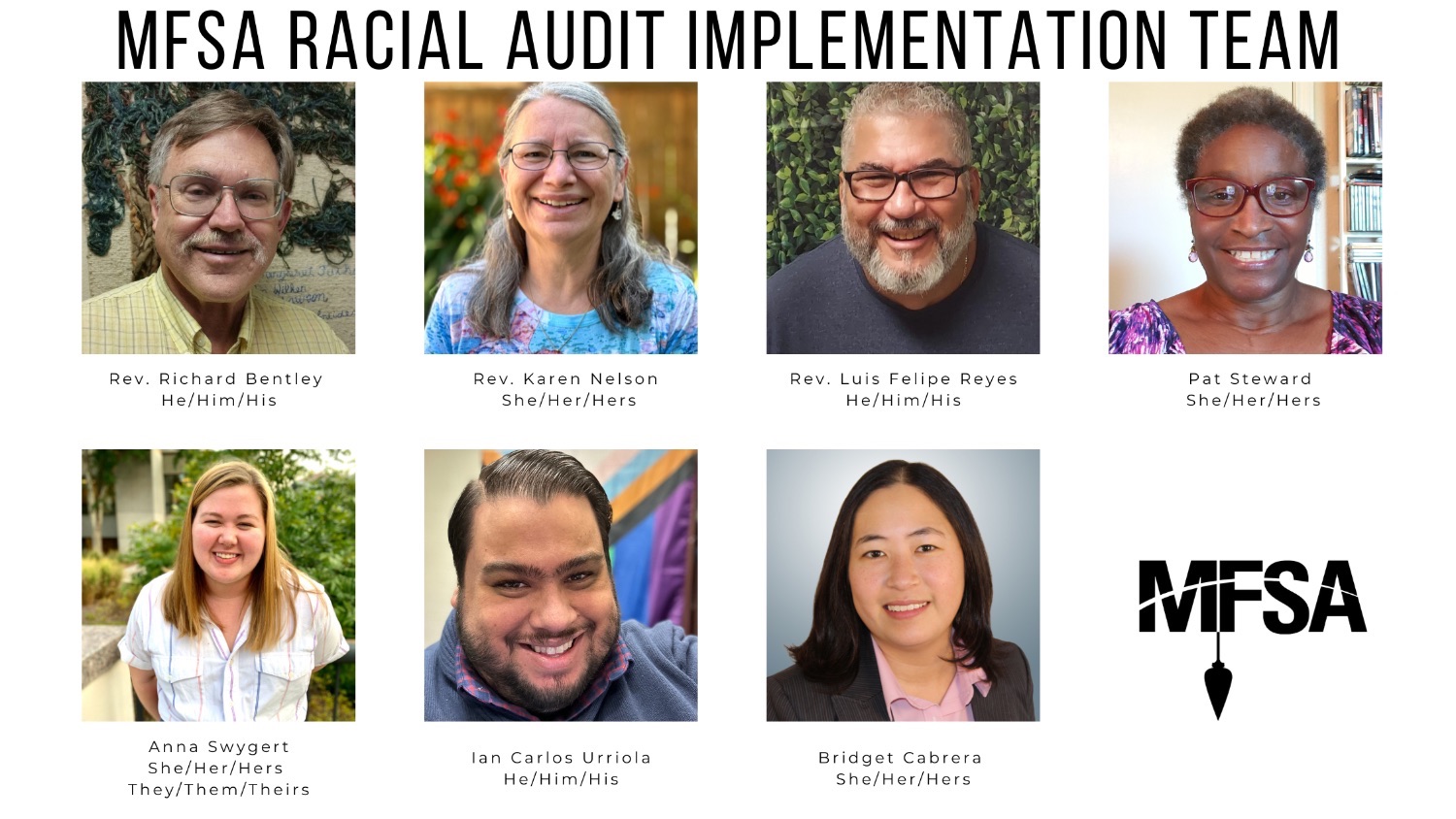 | Racial Audit Implementation Team Update "We Have Not Finished Yet..." by Patricia Stewart Note: In June 2023, the Methodist Federation for Social Action (MFSA) Board of Directors established the Racial Audit Implementation Team to carry forward the recommendations from the comprehensive Racial Audit. This work represents our deep commitment to becoming an anti-racist organization. Patricia Stewart is a member of that team, and this reflection is part of our collective journey to name, confront, and transform the white dominant culture within MFSA. It emerges from ongoing conversations centered on six key themes/patterns of white supremacy identified within our organization. These are the entrenched patterns we are actively working to disrupt as we move toward the liberation and equity we seek. We are sharing these reflections and insights publicly with our movement because accountability, transparency, and shared learning are essential to dismantling white supremacy. We know that transformation does not happen in isolation. By sharing our process, struggles, and growth, we hope to invite our broader community into this work with us—offering tools, solidarity, and space for mutual reflection as we continue building a more just and faithful movement. In the Methodist tradition, justifying grace is one of the ways God’s grace moves in our lives. It refers to the moment when a person accepts God’s offer of forgiveness, and through Christ, is reconciled with God. This is not the end of the spiritual journey, but rather a turning point, a reorientation toward new life, community, and justice. Justifying grace reminds us that while grace is freely given, it calls us into ongoing transformation. As a member of the original Racial Audit Task Force, I learned a lot about the history of MFSA. I studied documents, read interviews with those involved in the past, and helped conduct a survey of current participants. Throughout all of this, I learned MFSA was — and is — not perfect. As an organization, it has at times been a strong vehicle for justice, but at other times... | | | | | | | | | |  | Call Your Representatives and Demand Accountability We are reminded that respect for the office does not mean silence in the face of harm. Our democracy is under threat, and our most vulnerable communities are at risk. Now is the time to speak up—call your representatives and demand accountability. | | | | | | | |  | MFSA is now on Bluesky We've noticed many of our friends and partners making the move to this platform, and we're thrilled to join the conversation there. Stay connected with us for updates, advocacy, and conversations that matter. Connect with us @mfsavoices.org | | | | | | | |  | | | | | | | | | | | | |  | | | | | | | | | Contact Us Methodist Federation for Social Action
996 Maine Ave SW #307
Washington, District of Columbia 20024
(202) 240-2546
[email protected] | | | | | | | |